An analytical survival-focused look at how the world might actually unravel.
Day Zero: The First Missed Warning
Every global catastrophe begins quietly.
In this scenario, the first cases aren’t called zombies. They’re labeled as acute neurological syndromes—patients arriving at emergency rooms confused, aggressive, and unresponsive to pain. Doctors suspect rabies, prion disease, or a novel viral encephalitis. By the time video footage leaks online of patients attacking staff, the word zombie is already trending—but officials dismiss it as internet hysteria.
That dismissal costs days. Days matter.
The Pathogen: Why It Spreads So Fast
A zombie pandemic doesn’t rely on movie magic. It relies on biology and human error.
Plausible vectors include:
- A mutated rabies-like virus with shorter incubation
- A prion-based neurological disorder resistant to treatment
- A lab-altered virus designed to cross the blood–brain barrier
The infected don’t “die and reanimate.” Instead, higher brain function collapses while motor skills remain. Fear, pain, and empathy shut down. Aggression becomes reflex.
Bites aren’t magical—they’re simply an efficient transmission method.
Week One: Information Collapse
Governments attempt containment.
- Cities are sealed
- Travel halts
- Internet access is throttled to prevent panic
This backfires.
Rumors spread faster than facts. Some claim it’s a hoax. Others claim it’s divine punishment or a bioweapon. Conspiracy and denial cause mass movement—people fleeing infected areas, unknowingly carrying the pathogen with them.
Hospitals collapse first.
Week Two: Society Unravels
Once emergency services fail, the real danger isn’t the infected.
It’s people.
- Grocery stores empty within hours
- Fuel shortages immobilize cities
- Police forces fracture—some desert to protect families
Power grids begin failing as maintenance crews stop reporting. Nightfall becomes absolute in urban areas. Without light, surveillance, or communication, infected clusters roam unchecked.
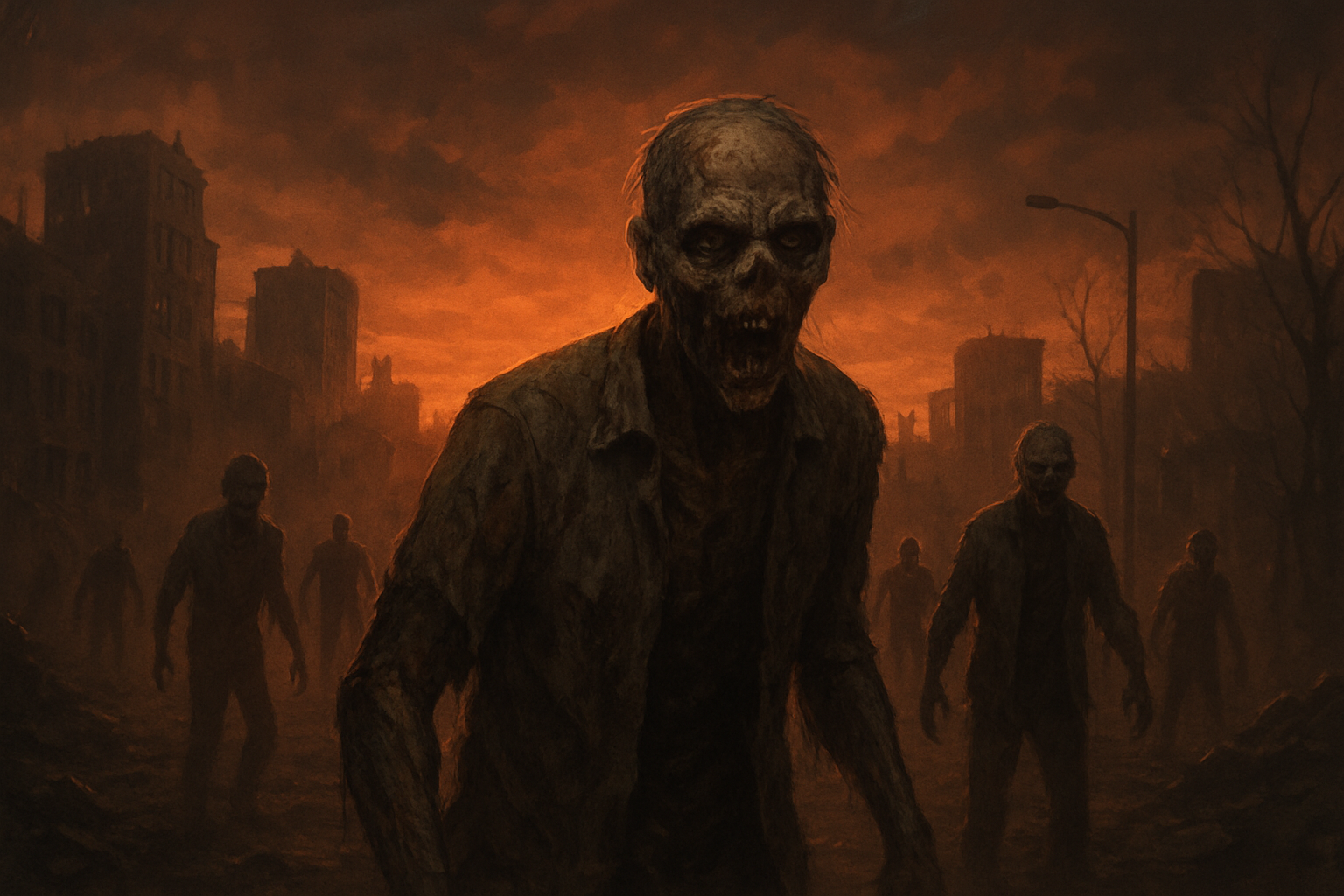
What Zombies Would Actually Be Like
Forget the movie tropes.
Realistic infected would:
- Move unevenly, not endlessly sprint
- Bleed out over days if injured
- Be vulnerable to cold, dehydration, and trauma
However, their danger comes from:
- Lack of fear
- Pain insensitivity
- Unpredictable group behavior
One infected is manageable. A crowd is fatal.
The Military Response
Once civilian infrastructure collapses, military intervention escalates.
- Firebombing infected zones
- Naval blockades
- Kill-on-sight rules of engagement
But soldiers are human. Morale collapses when orders involve civilian centers and infected children. Desertion increases. Ammunition and logistics strain under prolonged deployment.
No army is built to fight its own population indefinitely.
Months Later: The New World
If humanity survives, it does so fragmented.
- Small fortified settlements
- Barter economies
- Radio-based communication networks
Knowledge becomes currency. Doctors, engineers, and mechanics are protected like royalty. Firearms exist, but silence becomes more valuable than firepower.
The infected dwindle—not because they’re defeated, but because biology always wins.
Could It Really Happen?
A classic zombie apocalypse? No.
A global neurological outbreak causing mass violence and societal collapse?
Uncomfortably plausible.
History shows that pandemics don’t just kill—they expose weaknesses. Denial, misinformation, and delayed response are often deadlier than the disease itself.
The real horror wouldn’t be the undead.
It would be watching civilization fall apart while everyone argues about whether it’s real.
Final Thought
If a zombie pandemic ever began, you wouldn’t hear groaning in the streets first.
You’d hear silence.
And by the time you realized what that silence meant…
It would already be too late.