Introduction
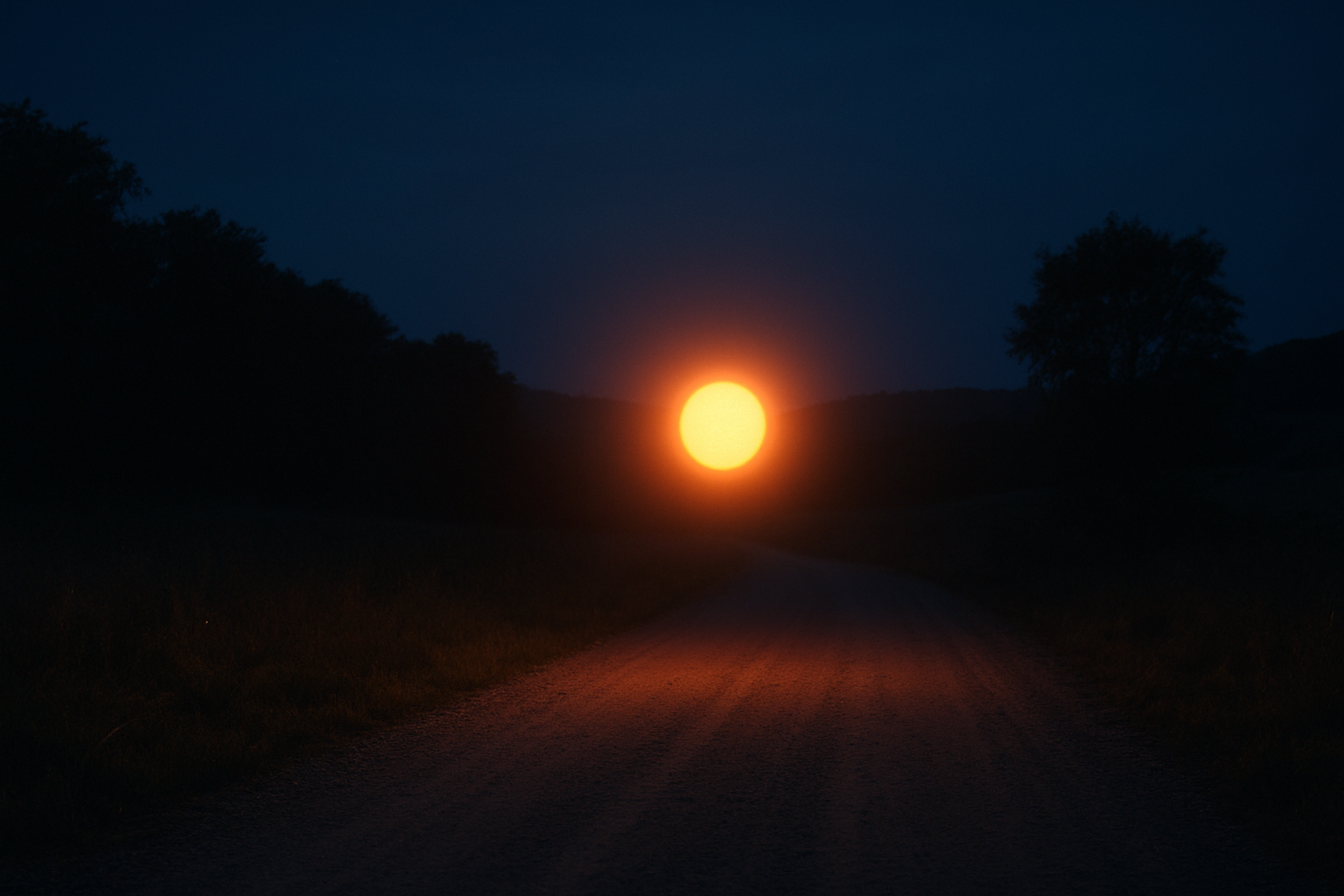
Among the many legends scattered across the American Midwest, few are as enduring—or as enigmatic—as the Hornet Spooklight. For more than a century, mysterious balls of glowing light have been reported along a lonely stretch of road straddling the Oklahoma–Missouri border. The phenomenon, often described as a floating, bobbing, or darting orb of orange-white luminosity, has captivated generations of residents, tourists, paranormal investigators, and scientists alike.
Despite numerous studies and countless personal testimonies, the Spooklight remains unexplained. What follows is a comprehensive exploration of its history, characteristics, folklore, scientific investigations, and cultural impact.
Geographical Setting
The Hornet Spooklight is traditionally observed on East 50 Road, often called “Spooklight Road,” located near Quapaw, Oklahoma, and Hornet, Missouri. The area is rural, lightly populated, and threaded with rolling hills, dense foliage, and an unobstructed east–west corridor ideal for long sightlines.
The region sits near the Ozark Plateau, known for its complex topographical layers, atmospheric quirks, and unusual temperature inversions—all of which have been cited as possible factors in the phenomenon’s behavior.
Historical Background
Early Reports
The earliest accounts of strange lights in the region predate the arrival of European settlers, with Indigenous oral histories referencing spirit lights or wandering fires. Cherokee and Quapaw peoples spoke of mysterious night glows that appeared sporadically, though descriptions vary widely.
19th and Early 20th Century Sightings
By the late 1800s, settlers in Hornet, Missouri, and the surrounding mining towns began reporting the Spooklight with increasing regularity. Newspaper stories from the early 20th century describe wagon travelers startled by floating lights that seemed to approach, retreat, or hover beside them.
In 1936, a small tourist boom began when a reporter from the Joplin Globe published a widely circulated piece about the light, drawing curious travelers from surrounding states. By the 1940s, the Spooklight was famous enough to warrant roadside vendors, souvenir shops, and guided night “hunts.”
Descriptions of the Phenomenon
Eyewitness accounts differ in detail but share strong commonalities:
Appearance
- Typically orange, yellow, or white
- Sometimes reddish at a distance
- Varies in size from a softball to the size of a basketball
- Appears as one entity but occasionally splits into two or more lights
Behavior
- Moves horizontally along the road
- Approaches vehicles, sometimes “chasing” or pacing them
- Moves with apparent intelligence or responsiveness
- Occasionally hovers motionlessly before vanishing
- Can “bounce” or bob like a lantern being carried
- Appears unexpectedly and disappears suddenly, often without fading
Environmental Conditions
Many sightings occur:
- On clear, cool nights
- After rain, when humidity is high
- On moonless evenings
- When air temperature is dropping, especially during autumn and winter months
Nonetheless, sightings have been reported across all seasons and weather types.
Folklore and Local Legends
The Spooklight has inspired a wealth of stories that contribute to its mystique.
The Tragic Lovers
One enduring tale claims the Spooklight is the wandering spirit of a Native American couple who leapt from a cliff after being forbidden to marry. Their spirits, it is said, roam the countryside in search of one another.
The Beheaded Miner
Another legend attributes the light to a miner who was decapitated in a nearby accident. The orb, according to this story, is his severed head searching for its body.
The Campfire Spirit
Some locals jokingly claim it is simply a ghost carrying a lantern, eternally patrolling the hills.
Though folkloric, these stories highlight the central perceived qualities of the light: intelligence, persistence, and a deeply emotional presence in the landscape.
Scientific Investigations
Early Studies
Beginning in the 1940s, both amateur and academic investigators attempted to document and explain the phenomenon. Several hypotheses were proposed:
- Car Headlights
The most common modern explanation suggests the Spooklight is a refracted or magnified image of distant vehicle headlights—particularly those on highways miles away. - Atmospheric Refraction
Unusual temperature inversions could create mirage-like effects that bend and distort light along the horizon. - Piezoelectric Effects
Some geologists have speculated that the region’s limestone and quartz formations might produce electrical discharges under certain pressures. - Swamp Gas / Bioluminescence
While swamp gas can create flames, the area lacks marshland, making this explanation less plausible.
The Army Corps of Engineers Report
A widely cited (though rarely circulated) report by the U.S. Army Corps of Engineers in the mid-20th century allegedly concluded the phenomenon was “a light of unknown origin.” Though informal, the statement reinforced the light’s reputation as a true mystery.
Optical Analysis Challenges
When attempts are made to replicate or track the Spooklight, researchers face difficulties:
- The light is unpredictable and may not appear on command.
- It often vanishes when approached physically.
- Long-distance optical measurements are disrupted by atmospheric conditions.
Despite many attempts, no single explanation covers all observed behaviors.
Modern Sightings and Cultural Impact
The Spooklight continues to be reported today, maintaining its status as one of America’s longest-running unexplained phenomena. Modern visitors often record videos or photos, though few provide clear footage due to the light’s sudden movement and ephemeral nature.
Tourism
The phenomenon remains a minor tourist draw, particularly for paranormal enthusiasts, hikers, photographers, and families seeking a nighttime adventure. Spooklight Road is often lined with vehicles on weekends during peak seasons.
Influence on Media
The Hornet Spooklight has been featured in:
- Paranormal documentaries
- TV episodes on unexplained mysteries
- Books on ghost phenomena
- Regional tourism literature
- Online urban-legend databases
Its enduring appeal lies partly in the fact that it is neither hoax nor myth alone—thousands of people have genuinely encountered something unusual in the hills.
Why the Spooklight Endures
The Hornet Spooklight’s mystique persists for several key reasons:
- Consistency Over Time
Unlike fleeting urban legends, the Spooklight has been documented for well over a century. - Lack of Definitive Explanation
While many theories exist, none fully account for the experience. - Experiential Nature
The phenomenon is best observed in person, giving it a mythic, pilgrimage-like quality. - Cultural Integration
It is woven deeply into regional identity and storytelling traditions. - Ambiguity and Wonder
Human fascination thrives where science and folklore meet without resolution.
Conclusion
The Hornet Spooklight occupies a singular place in American folklore and scientific curiosity. Its glowing presence in the hills of the Oklahoma–Missouri border has inspired awe, fear, speculation, and wonder for generations. Whether a natural optical illusion, a geological anomaly, a paranormal manifestation, or a combination of environmental factors, the Spooklight stands as a reminder that not all phenomena can be neatly explained.
It remains—quite fittingly—a light in the darkness, inviting us to look closer, think deeper, and embrace the mysteries that linger on the edges of our everyday world.