
Introduction
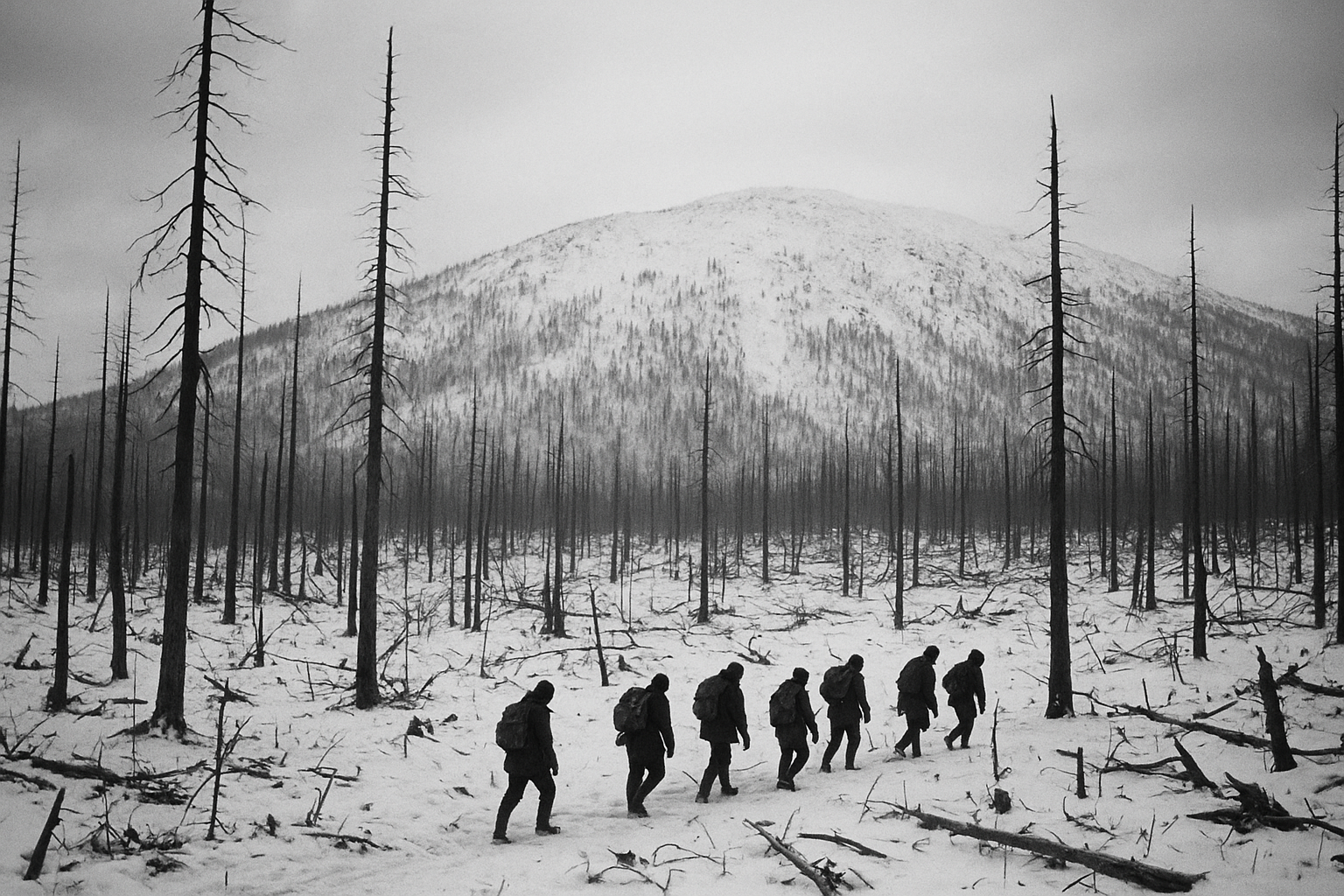
In the dead of winter, deep within Russia’s northern Ural Mountains, nine experienced hikers met a fate so strange and violent that it would echo across decades. Official explanations would come and go, witnesses would whisper, files would vanish and reappear, and the truth would remain stubbornly out of reach. Known today as The Dyatlov Pass Incident, the 1959 tragedy has become one of the most chilling and debated mysteries of the modern era—where evidence seems to contradict itself at every turn.
What happened on that frozen slope during the night of February 1–2, 1959? Why did seasoned mountaineers flee their tent barefoot into subzero darkness? And what force was powerful enough to leave some bodies shattered, yet others untouched?
The Expedition
The Hikers
The group consisted of nine students and graduates from the Ural Polytechnic Institute, led by Igor Dyatlov, a 23-year-old radio engineering student and an experienced expedition leader. All members were highly trained skiers and hikers, most holding Grade II or III certifications, the highest available at the time.
The team included:
- Igor Dyatlov
- Zinaida Kolmogorova
- Yuri Doroshenko
- Lyudmila Dubinina
- Yuri Krivonischenko
- Rustem Slobodin
- Nikolai Thibeaux-Brignolle
- Alexander Kolevatov
- Semyon Zolotaryov (a decorated WWII veteran)
Their goal was ambitious but achievable: a winter trek to Otorten Mountain, whose name in the local Mansi language ominously translates to “Don’t Go There.”
The Final Camp
On February 1, 1959, worsening weather conditions—high winds, heavy snowfall, and near-zero visibility—forced the group off their planned route. Instead of descending to the shelter of nearby forest, Dyatlov chose to camp on the slope of Kholat Syakhl, another Mansi-named mountain meaning “Mountain of the Dead.”
They pitched their tent on an exposed incline, cutting into the snow to create a platform. This decision, debated endlessly by experts, placed them directly in the path of severe alpine conditions.
That night, temperatures plunged to –22°F (–30°C) or lower. Winds howled across the slope. And sometime after nightfall, something went terribly wrong.
Discovery and Initial Shock
When the group failed to return by their expected date, a search was launched. On February 26, rescuers discovered the abandoned campsite.
What they found defied logic:
- The tent was slashed open from the inside
- Boots, coats, food, and equipment were left behind
- Footprints led downhill toward the forest—some barefoot, some in socks
There were no signs of a struggle inside the tent. No evidence of another group. No avalanche debris burying the site.
It was as if the hikers had fled in blind panic.
The Bodies in the Snow
The First Five
The first bodies were found scattered between the forest and the tent.
- Two hikers lay near a dying campfire, wearing only underwear
- Three others were found collapsed along the route back toward the tent
Autopsies concluded that these five died primarily of hypothermia, though some showed minor injuries, including a cracked skull and facial abrasions.
The Ravine Group
Two months later, after snowmelt, searchers uncovered the remaining four bodies in a ravine.
Their injuries were horrifying:
- Massive chest fractures comparable to car crash trauma
- A crushed skull
- One woman, Lyudmila Dubinina, was missing her tongue, eyes, and part of her lips
Strangely, these injuries showed little to no external bruising, suggesting immense internal force without surface impact.
Unsettling Details
Radiation
Clothing belonging to two hikers showed elevated levels of radiation. While not lethal, the presence of radiation added another layer of mystery, especially during the height of the Cold War.
Orange Skin and Gray Hair
Some bodies were described as having orange or brownish skin discoloration, and hair that appeared prematurely gray—features often cited in later conspiracy theories.
Missing Eyes and Tongue
Medical examiners suggested scavenging animals could explain the missing soft tissue. Critics argue that the location and condition of the bodies make this explanation incomplete.
The Official Investigation
In May 1959, Soviet authorities closed the case with a vague conclusion:
“The cause of death was a compelling natural force which the hikers were unable to overcome.”
The case files were classified. The area was closed to hikers for three years. Witness testimonies were limited, and some records later appeared altered or incomplete.
For decades, the Soviet explanation satisfied no one.
Theories and Explanations
Avalanche Theory
Modern investigations suggest a slab avalanche may have struck the tent, forcing the hikers to flee. While appealing to scientists, critics point out:
- No clear avalanche debris at the site
- Footprints remained visible weeks later
- Injuries inconsistent with a typical avalanche
Katabatic Winds
Rare, violent downslope winds could have created intense noise and pressure, inducing panic. This theory explains the sudden flight but not the extreme injuries.
Infrasound-Induced Panic
Low-frequency wind vibrations may cause disorientation, fear, and paranoia. While intriguing, it remains difficult to prove.
Military Testing
Some witnesses reported glowing orbs in the sky that night. Theories suggest secret weapons tests, parachute mines, or rocket debris. The radiation findings fuel this idea, but no definitive military records confirm it.
Violent Encounter
Speculation about escaped prisoners, local tribes, or internal conflict has largely been dismissed due to lack of evidence.
The Unknown
More speculative ideas—cryptids, UFOs, or paranormal forces—persist largely because conventional explanations fail to account for every anomaly.
Reopened Investigations
In 2019–2020, Russian authorities reopened the case, ultimately reaffirming a natural cause, favoring the avalanche explanation.
Yet even these modern conclusions acknowledge:
- Significant gaps in the original investigation
- Lost or contradictory evidence
- Unexplained forensic anomalies
For many, the mystery remains unresolved.
Why the Dyatlov Pass Incident Endures
The case persists not because of one unanswered question—but because every answer creates new doubts. Experienced hikers acting irrationally. Injuries without visible cause. Official silence layered over tragedy.
The Dyatlov Pass Incident exists in a gray space between science and uncertainty, where human vulnerability meets the raw, indifferent power of nature—or something else entirely.
More than sixty years later, the mountain keeps its secret.
Conclusion
On the slopes of Kholat Syakhl, nine lives ended in confusion, terror, and silence. Whether the truth lies in physics, secrecy, or forces we do not yet understand, the Dyatlov Pass Incident remains a chilling reminder: even the most prepared can be undone in a single night.
And some mysteries refuse to stay buried beneath the snow.