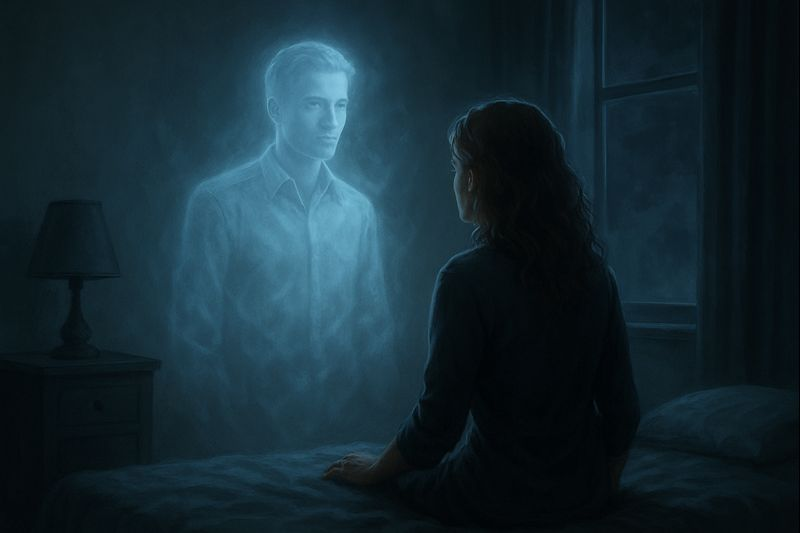
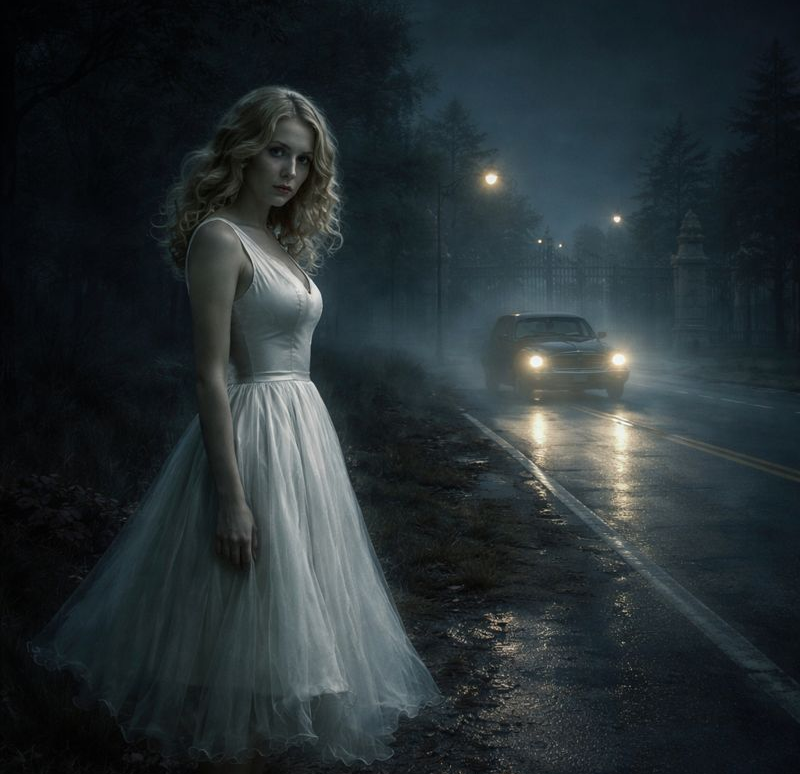
Few American ghost legends have demonstrated the longevity, consistency, and cultural impact of Resurrection Mary, the phantom hitchhiker said to roam the outskirts of Chicago near Resurrection Cemetery. For nearly a century, drivers have reported picking up a young woman dressed in white who vanishes without explanation—sometimes leaving behind physical evidence that suggests her presence was not merely imagined.
Unlike many urban legends that mutate wildly over time, Resurrection Mary’s story has remained remarkably stable across decades. Witnesses who never knew of the legend beforehand often describe the same details: a blonde woman in a formal white dress, a quiet demeanor, a request for a ride north on Archer Avenue, and a sudden disappearance near the cemetery gates.
This article examines the origins of the legend, its historical context, and the most compelling eyewitness accounts—many of which were recorded independently by researchers long before the internet amplified ghost lore.
Geographic and Historical Context
Resurrection Mary is associated primarily with:
- Archer Avenue (Illinois Route 171)
- Resurrection Cemetery, Justice, Illinois
- Nearby former dance halls, including the now-defunct O. Henry Ballroom and Liberty Grove
The legend dates back to the 1930s, a period when dance halls were a central feature of social life for young adults in Chicago. Many versions of the story suggest Mary was a young woman killed in a hit-and-run accident after leaving a dance late at night, sometime between 1927 and 1934.
Local folklore maintains that her spirit retraces the final moments of her life, attempting to return home.
Physical Description of Resurrection Mary
Across hundreds of accounts, Mary’s appearance is strikingly consistent:
- Blonde hair, often shoulder-length or curled
- A white or light-colored formal dress
- Light shoes or dancing slippers
- Minimal speech, polite and reserved
- A cold or distant physical presence when touched
Witnesses frequently note that she appears solid and human until the moment she vanishes.
Early Recorded Witness Accounts
The 1930s Taxi Driver Encounter
One of the earliest documented cases involves a Chicago taxi driver who reported picking up a young woman near a ballroom on Archer Avenue. She requested a ride north but became increasingly quiet during the trip.
According to the driver’s statement, as he approached Resurrection Cemetery, he turned to ask for directions—only to find the back seat empty. The car doors had not opened, and no one had exited.
This account was later corroborated by other drivers reporting similar experiences along the same stretch of road.
1940s–1950s: A Pattern Emerges
By the 1940s, Resurrection Mary had become a whispered topic among cab drivers and late-night commuters. However, many witnesses insisted they had never heard of the legend until after their encounter.
Witness Account: 1949 (Anonymous Motorist)
“She was quiet, but she answered when spoken to. I remember thinking she must be cold—it was late autumn, and she didn’t have a coat. When I slowed near the cemetery, she said, ‘This is fine.’ I looked back, and she wasn’t there. I stopped the car. There was no one on the road.”
The motorist reportedly returned to the location the following evening, shaken but curious, and asked local residents about the area—only then learning of similar encounters.
The Vanishing Passenger Phenomenon
A defining characteristic of Resurrection Mary sightings is the abrupt disappearance of the passenger without any physical movement or sound. Doors do not open. Footsteps are not heard. In several cases, drivers insist they were watching the rearview mirror continuously.
This phenomenon distinguishes Resurrection Mary from simple hallucinations or misidentifications. Witnesses often describe a moment of cognitive dissonance—an inability to process what they are seeing—followed by delayed fear or shock.
The 1970s: Physical Evidence and Police Reports
The Cemetery Gate Incident (1976)
One of the most famous Resurrection Mary cases occurred in the mid-1970s and involved physical damage to cemetery property.
According to reports, a young woman matching Mary’s description was seen inside Resurrection Cemetery late at night. When police arrived, they found two iron bars bent outward on the cemetery’s locked gate—despite no signs of forced entry by tools or vehicles.
Several officers reported seeing a woman in a white dress walking between headstones before she disappeared.
Photographs of the bent bars circulated among paranormal researchers and are still cited as rare physical evidence associated with the legend.
Witness Account: Chicago Police Officer, 1976
“I thought it was a trespasser at first. She was moving slowly, like she was lost. When we called out, she didn’t respond. Then she was just… gone. No sound. No movement. Nothing.”
The Ballroom Connection
Many witnesses report picking up Resurrection Mary near former dance halls that were popular in the early 20th century.
In some accounts, she mentions having been dancing, or that she “had a fight” with someone at the ballroom. In rare cases, drivers claim she gave a specific address—often a nearby neighborhood where historical records indicate a young woman with a similar description once lived.
This has led some researchers to speculate that Resurrection Mary may be the spirit of a real individual whose identity has been lost to time.
Skeptical Explanations vs. Consistency of Reports
Skeptics propose several explanations:
- Fatigue or hypnagogic hallucinations in late-night drivers
- Misidentification of pedestrians
- Memory distortion influenced by folklore
However, proponents point to:
- Independent accounts spanning nearly 100 years
- Witnesses unaware of the legend prior to their encounter
- Physical evidence, including the cemetery gate damage
- Consistent descriptions across decades
Notably, Resurrection Mary’s behavior does not evolve with modern storytelling trends. She does not speak ominously, threaten witnesses, or seek attention—traits common in fabricated legends.
Modern Sightings
Reports continue into the 21st century, though less frequently due to increased traffic, surveillance, and changes to the area. Modern witnesses still describe:
- A young woman requesting a ride
- Disappearing near the cemetery
- An overwhelming sense of confusion rather than immediate fear
Some rideshare drivers have shared similar experiences, though most hesitate to report them publicly.
Cultural Impact and Legacy
Resurrection Mary has become one of America’s most studied ghost legends, featured in:
- Folklore collections
- Paranormal documentaries
- Academic studies on urban legends
- Local Chicago history publications
What sets her apart is not spectacle, but repetition. The legend endures not because it escalates, but because it remains the same.
Conclusion
Resurrection Mary occupies a unique space between folklore and unexplained phenomenon. Whether interpreted as a residual haunting, a psychological pattern, or the spirit of a young woman endlessly retracing her final journey, her story persists with unsettling clarity.
For nearly a century, drivers along Archer Avenue have shared a quiet, fleeting encounter—one that ends not with terror, but with an empty seat and a question that lingers long after the road disappears behind them.