Throughout human history, the boundary between life and death has fascinated scholars, theologians, and ordinary people alike. One of the most compelling phenomena at this boundary is the near-death experience (NDE)—a reported set of perceptions and sensations that occur when individuals face extreme danger, severe illness, or clinical death. NDEs are often described as profoundly transformative and, in many cases, life-altering.
What is a Near-Death Experience?
A near-death experience is typically defined as an event in which a person comes close to death or is in a situation of intense physical or emotional threat, yet survives. Those who report NDEs often describe vivid and unusual experiences, which can include:
- Out-of-body experiences (OBEs): A sensation of floating above one’s body and observing events from an external perspective.
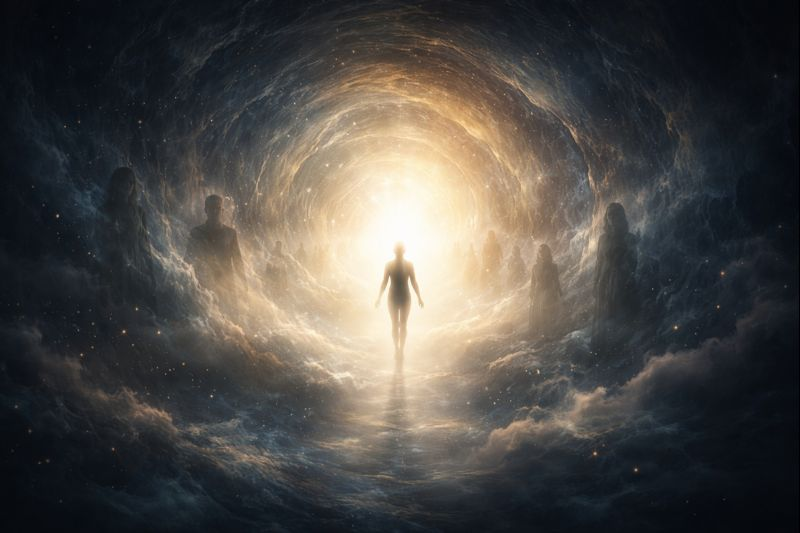
- Traveling through a tunnel: Many report moving through a dark passageway toward a bright light.
- Encountering beings or deceased relatives: Some describe meeting spiritual entities, angels, or loved ones who have passed.
- Life review: A panoramic review of one’s life events, often highlighting moral and ethical reflections.
- Feelings of peace or bliss: Overwhelming emotions of love, serenity, and interconnectedness are common.
While each experience is unique, recurring patterns suggest a shared human consciousness may influence NDEs.
Scientific Perspectives
Researchers have long debated whether NDEs are purely physiological or suggestive of a consciousness beyond the brain. Several theories attempt to explain these phenomena:
- Neurological explanations:
- Oxygen deprivation (hypoxia) in the brain may trigger hallucinations or vivid memories.
- Neurochemical releases, such as endorphins or DMT, could induce feelings of euphoria and detachment.
- Psychological interpretations:
- Some psychologists view NDEs as a coping mechanism, where the mind creates comforting illusions in response to extreme stress.
- Cultural and religious expectations may shape the imagery and symbolism reported in NDEs.
- Paranormal or consciousness-based theories:
- Some researchers argue NDEs may hint at the persistence of consciousness independent of the physical body.
- Reports of accurate observations from outside the body, especially in controlled studies, fuel ongoing debate in this area.
Famous Cases and Research
One of the most well-documented investigations into NDEs is by Dr. Raymond Moody, whose 1975 book Life After Life compiled numerous firsthand accounts. His research identified the common elements that form the basis of modern NDE studies.
Another notable example involves Pam Reynolds, who underwent a rare neurosurgical procedure where her brain activity was nearly nonexistent, yet she reported a vivid out-of-body experience, including details of surgical instruments and conversations she could not have normally perceived.
Transformative Effects
People who experience NDEs often report profound changes in their outlook on life:
- Reduced fear of death
- Increased spirituality or belief in an afterlife
- Greater empathy and compassion
- Re-evaluation of life priorities and values
These transformations have been reported across cultures, religions, and age groups, suggesting a universal element to the experience.
A Balanced View
While skeptics argue that NDEs are explainable through science, dismissing them entirely may overlook the psychological, emotional, and spiritual significance they hold for millions. For some, NDEs provide reassurance of continuity beyond death; for others, they are reminders of life’s fragility and the value of human connection.
Conclusion
Near-death experiences remain one of the most intriguing mysteries at the intersection of science, spirituality, and consciousness. Whether interpreted as neurological phenomena, psychological processes, or glimpses into an afterlife, NDEs challenge our understanding of life and death, prompting humanity to reflect on what truly lies beyond the threshold.
Timeline of Famous Near-Death Experiences
1975 – Dr. Raymond Moody Publishes Life After Life
- Summary: Moody compiled numerous NDE accounts, identifying recurring elements such as tunnels, lights, and life reviews.
- Key Takeaways: First major study to recognize NDEs as a common phenomenon with shared characteristics. Introduced the term “near-death experience” to the public.
1980s – Howard Storm
- Summary: During a perforated stomach crisis, Storm experienced initial terror with dark beings, followed by guidance from loving entities.
- Key Takeaways: NDEs can be profoundly transformative, sometimes converting skeptics or atheists to a spiritual outlook.
1980s – Betty Eadie
- Summary: Eadie experienced a peaceful NDE involving tunnels, spiritual beings, and life lessons.
- Key Takeaways: Emphasizes the healing and life-guiding aspects of NDEs; provides insight into the universal themes of love and interconnectedness.
1991 – Pam Reynolds
- Summary: During a rare neurosurgery, Reynolds reported an out-of-body experience, accurately observing surgical details despite nearly flatlined brain activity.
- Key Takeaways: Often cited as compelling evidence for consciousness independent of brain function.
2006 – Anita Moorjani
- Summary: Terminally ill with cancer, Moorjani experienced an NDE of boundless awareness and clarity, understanding her illness and its emotional roots.
- Key Takeaways: Demonstrates the potential for NDEs to provide deep personal insight and even physical healing.
2007 – Colton Burpo
- Summary: During emergency surgery, young Colton reported visiting heaven, meeting deceased relatives, and encountering spiritual beings.
- Key Takeaways: Highlights how NDEs occur across age groups and can profoundly influence spiritual beliefs, even in children.
2008 – Dr. Eben Alexander
- Summary: Neurosurgeon in a coma due to meningitis traveled to a realm of light and consciousness. Later documented in Proof of Heaven.
- Key Takeaways: A medically trained skeptic’s account brought mainstream attention to the possibility of consciousness beyond the brain.
Observations Across the Timeline
- Common Elements: Out-of-body experiences, tunnels, bright lights, encounters with beings, life reviews, and profound peace.
- Transformative Impact: Many NDEs result in lasting changes in spirituality, outlook on life, and relationships.
- Scientific Debate: Cases like Pam Reynolds and Eben Alexander spark discussion about the nature of consciousness and the limits of brain-based explanations.
- Cultural Universality: While details vary, the core experiences appear across cultures, religions, and ages.