Audible Haunting Phenomena Across the Supernatural Landscape
By The Unexplained Files
Among the many forms of ghostly manifestations—apparitions, cold spots, moving objects—there is one category that stands out as far more interactive, immediate, and unnervingly personal: auditory hauntings, where spirits are believed to communicate through sound.
Unlike visual sightings, which can be dismissed as tricks of the eye, auditory events involve measurable vibrations, recorded voices, physical knocks on surfaces, footsteps pacing across empty rooms, and whispers that come from nowhere and everywhere at once. These phenomena are among the oldest and most globally consistent forms of paranormal activity.
This article explores the most common types of auditory hauntings:
- Phantom footsteps
- Knocking ghosts
- Disembodied whispers
- Responsive spirits that answer or interact
And we examine why sound—more than any other medium—might be the chosen method for spirits reaching across the veil.
I. Phantom Footsteps: The Presence You Hear But Never See
Phantom footsteps are one of the most widely reported forms of hauntings. They occur in private homes, hotels, prisons, hospitals, military bases, mines, and battlefields. Witnesses describe the same patterns over and over:
Typical Characteristics
- Slow pacing on wooden floors
- Bootsteps in hallways with no one present
- Running footsteps in attics or basements
- Heavy thuds descending stairs
- Rhythmic walking patterns that repeat nightly
Footsteps often correlate with locations tied to trauma, routine, or ritual—places where someone once walked the same route again and again.
The Residual Theory
Many investigators consider footsteps to be residual hauntings, a form of psychic imprint repeating like a loop. These sounds typically ignore witnesses entirely, continuing their path whether anyone hears them or not.
When Footsteps Become Intelligent
Far less common are responsive footsteps—those that:
- Pause when a witness stops walking
- Follow or mimic a person’s movement
- Approach quickly and then vanish
- Change pace when addressed
These cases suggest awareness, intent, or even interaction—hallmarks of a classical intelligent haunting.
One frightening account from a historic inn in Pennsylvania involved guests hearing footsteps circle their bed in the dark, slow and deliberate, though nothing ever appeared.
II. Knocking Ghosts: Spirits That Signal Their Presence
Knocking ghosts—spirits that communicate through taps, knocks, or raps—have been documented for centuries. They are so common that entire paranormal methodologies (including early séance practices) revolved around structured knock responses.
Types of Ghostly Knocking
- Wall tapping behind closed rooms
- Floor knocks under beds or furniture
- Window taps despite no one being outside
- Object raps on doors, cabinets, or tables
- Intelligent knock patterns responding to questions
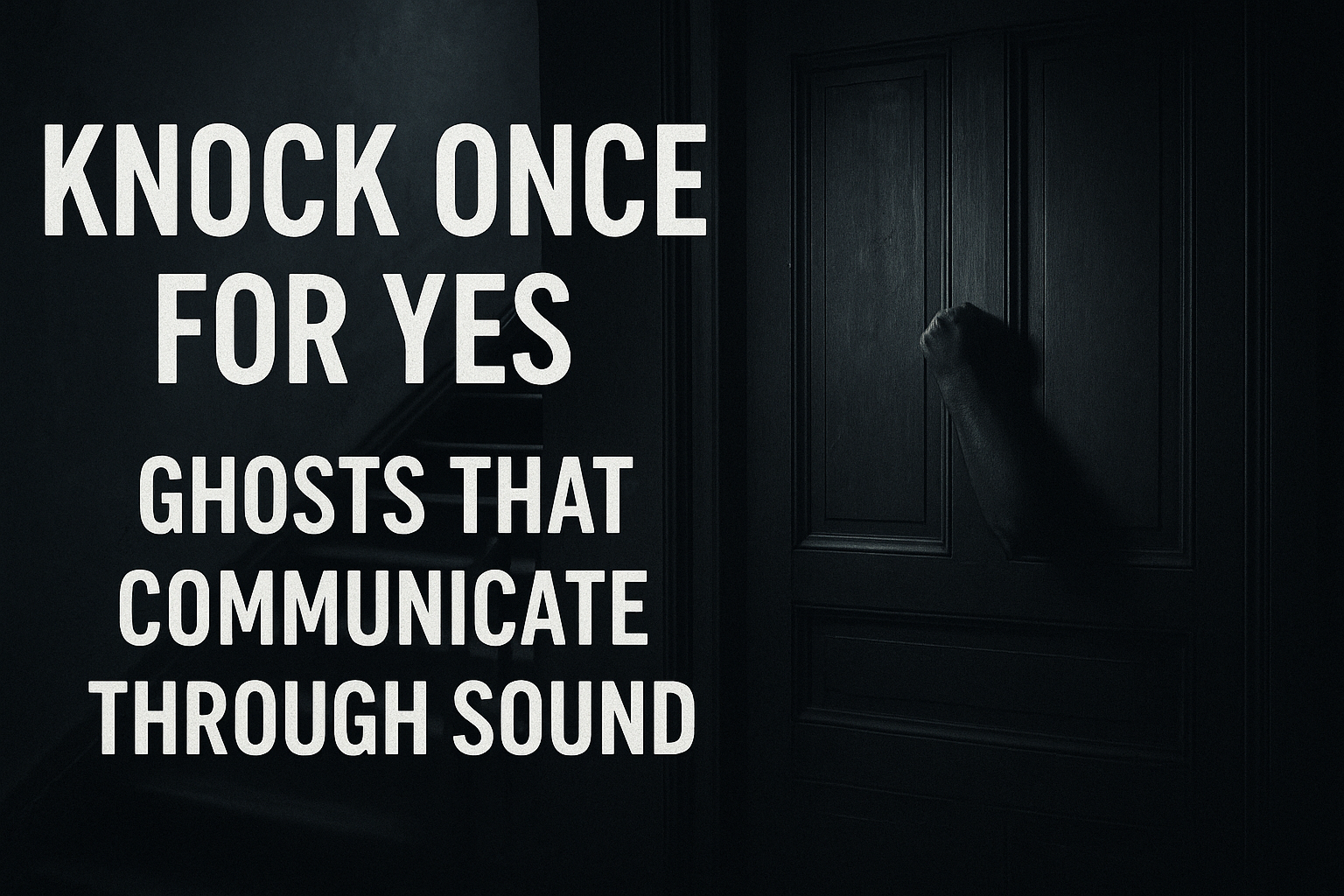
Some knocking patterns mimic coded messages:
- One knock for “yes”
- Two knocks for “no”
- Repeating a rhythm after a person taps it
These cases often feel profoundly personal—almost conversational.
The Poltergeist Connection
Knocking is frequently associated with poltergeist activity, especially in cases involving:
- Adolescents
- Emotional stressors
- Sudden household changes
- Unexplained objects moving
However, many knock-based hauntings persist for decades, well beyond typical poltergeist timeframes.
Historical Cases
The famous Hydesville Rappings of 1848—central to the birth of the Spiritualist movement—involved knocks that accurately answered questions about deceased individuals. Skeptics have never fully replicated its complexity.
Modern homeowners report similar patterns, often in houses with no structural explanation for rhythmic tapping.
III. Disembodied Whispers: Voices From Empty Air
Few auditory hauntings unsettle the human mind more deeply than whispers—intimate, breathy, and often unintelligible.
Common Characteristics
- Hearing one’s name quietly spoken
- Incoherent murmurs beside the bed
- Sudden breathy huffs or sighs
- Conversations between unseen entities
- Voices coming from inside walls, closets, or hallways
Witnesses describe whispers as directional—coming from a specific spot—yet they find nothing there.
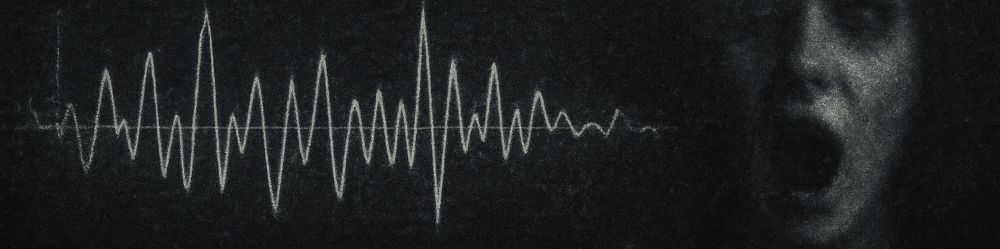
Electronic Voice Phenomena (EVP)
Whispers often appear in audio recordings when no one remembers speaking. Investigators classify EVPs into three categories:
- Class A: Clear and understandable by anyone
- Class B: Audible but unclear
- Class C: Faint or distorted
Disembodied whispers often fall into Class B or C, with some EVPs sounding impossibly close to the microphone—far closer than any living person could have been.
Psychological and Environmental Factors
Skeptics argue for air flow, pareidolia, or auditory hallucinations. However:
- Many whispers are recorded on equipment
- Multiple witnesses hear the same voice simultaneously
- Whisper EVPs often respond directly to questions
Something beyond environmental noise appears to be at work.
IV. Responsive Spirits: When Sound Becomes a Conversation
While most auditory hauntings are passive, responsive auditory phenomena are rare and deeply compelling. These cases involve entities that directly answer, respond, or interact through sound.
Forms of Intelligent Sound Responses
- Answering knocks (one for yes, two for no)
- Mimicking rhythms tapped by investigators
- Footsteps that follow or approach
- Voices responding to direct questions
- Noises that cease or begin at request
- Objects that tap or move when prompted
An investigation at a century-old schoolhouse in Kansas yielded repeated knocks in exact response to questions about the building’s history. Multiple investigators documented it independently.
Why Sound?
Many paranormal researchers believe sound is:
- Energy-efficient for spirits
- Easier to manifest than a visual apparition
- A bridge between frequencies or dimensions
- A form of communication the living can perceive without specialized ability
In some cultures, sound-based hauntings are considered the first stage of contact before full apparitional manifestations.
The Experience of Being Answered
The moment when a spirit responds with a knock or whisper is often described as:
- “Electrifying”
- “Disorienting”
- “Like the room suddenly got aware”
These experiences blur the boundary between the living and the dead more than any shadow or cold spot ever could.
V. What Causes Auditory Hauntings?
The Leading Theories
1. Residual Energy Loops
Trauma, routine, or strong emotion creates a “recording” that replays as sound.
2. Intelligent Spirits
Entities capable of communication choose sound for ease and clarity.
3. Environmental Acoustics
Certain structures amplify natural noises, creating false positives—though this does not explain recorded responses.
4. Interdimensional Overlap
Sound may travel more easily than light across thin boundaries between realities.
5. Poltergeist Manifestations
Energy generated by living individuals may create knocks or voices mimicking ghosts.
No single theory fits all cases.
VI. The Emotional Impact of Being Heard
Auditory hauntings carry a psychological weight unlike any other paranormal experience. Sound is invasive—it enters the mind whether welcome or not.
Witnesses report:
- Sudden fear or adrenaline spikes
- Feelings of being watched
- Challenges distinguishing between internal and external sound
- Difficulty returning to sleep after nighttime events
Yet many also describe a strange sense of connection, as though someone on the other side is trying to reach out.
Conclusion: When the Dead Speak, We Listen
Auditory hauntings remind us that the boundary between worlds may be thinner than we believe. Footsteps walking through empty corridors, knocks from unseen hands, whispers carried on still air—these are not passive anomalies. They are attempts at communication.
Some spirits seem trapped in routine.
Some seem to warn, seek, or remember.
And some simply want to be acknowledged.
Listen closely.
You may hear more than you expect.
Copyright Notice
© 2025 The Unexplained Files. All Rights Reserved.
Unauthorized reproduction or distribution of this article—whether in print, digital, or audio format—is prohibited without written permission from the site owner.