Below is a comprehensive, publication-ready article suitable for a paranormal research blog or investigative website.
EVP Recordings: Real Communication or Human Misinterpretation?
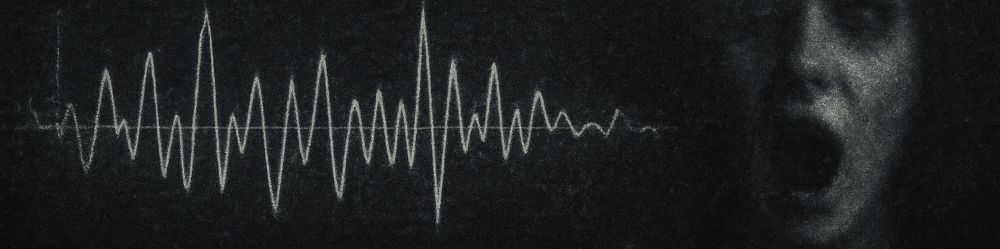
Electronic Voice Phenomena (EVP) remain one of the most debated forms of alleged paranormal evidence. Often described as unexplained voices captured on audio recordings, EVP are said to appear without an identifiable physical speaker at the time of recording. To believers, these voices represent communication from spirits or other non-physical intelligences. To skeptics, EVP are a textbook example of auditory pareidolia—the human brain’s tendency to impose meaning onto random noise. This article examines the origins of EVP, notable recordings, investigative methods, and the psychological and scientific explanations that challenge their authenticity.
What Are EVP Recordings?
Electronic Voice Phenomena refer to anomalous sounds—typically voices or voice-like utterances—captured on electronic recording devices. These recordings are usually discovered during playback rather than heard in real time.
EVP are commonly categorized into three classes:
- Class A – Clear, easily understandable voices with little or no interpretation required.
- Class B – Audible but indistinct voices requiring careful listening.
- Class C – Faint, fragmented sounds that are heavily dependent on listener interpretation.
Most EVP reported in investigations fall into the latter two categories, where subjectivity plays a significant role.
Historical Origins of EVP
The concept of spirit voices predates modern electronics. In the late 19th century, spiritualist movements reported spirit raps, trumpet voices, and séances involving disembodied speech. However, EVP as we know them emerged in the mid-20th century.
In 1959, Swedish documentary filmmaker Friedrich Jürgenson reported hearing voices on bird recordings he had made outdoors. He believed the voices belonged to deceased individuals, including his own mother. Jürgenson’s work inspired Konstantin Raudive, a Latvian psychologist, who claimed to have recorded tens of thousands of EVP voices and authored Breakthrough (1971), a foundational text in EVP research.
How EVP Are Typically Recorded
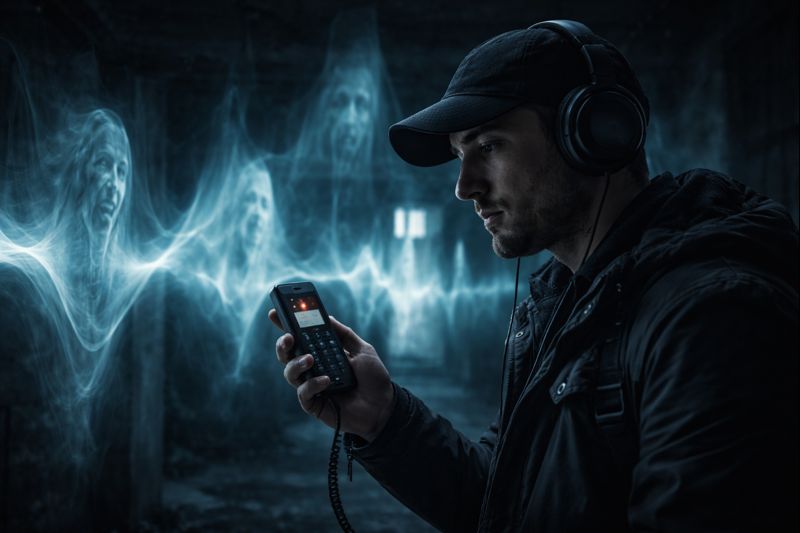
Paranormal investigators employ a range of audio techniques to capture EVP, including:
- Digital audio recorders in silent or controlled environments
- White noise generators or radio sweep devices
- Spirit boxes that rapidly scan radio frequencies
- Smartphone recording apps with noise suppression disabled
Sessions often involve investigators asking questions aloud and leaving periods of silence for responses. Voices interpreted as answers are later isolated during audio review.
Famous EVP Examples Cited by Believers
Several EVP recordings are frequently referenced in paranormal literature:
- The “Direct Response” EVP – Recordings in which voices appear to answer investigators’ questions contextually.
- The Raudive Voices – Allegedly multilingual EVP recorded without intentional prompting.
- Police and Emergency EVP – Claims of voices appearing on law enforcement or emergency service recordings under unexplained circumstances.
Believers argue that the contextual relevance, emotional tone, and linguistic structure of these recordings suggest intelligence rather than randomness.
Scientific and Skeptical Explanations
Despite decades of investigation, EVP have not been accepted as evidence of paranormal communication by the scientific community. Several explanations are commonly cited:
Auditory Pareidolia
Humans are neurologically predisposed to detect patterns—especially voices. Random noise can be perceived as speech once the listener expects or is told what to hear. Once a phrase is suggested, it becomes difficult to “unhear” it.
Confirmation Bias
Investigators may unconsciously interpret ambiguous sounds to fit their expectations or the context of the investigation. Emotional investment can strongly influence interpretation.
Radio Interference and Signal Bleed
Many EVP devices are susceptible to picking up stray radio signals, walkie-talkie transmissions, or electromagnetic interference, especially in urban environments.
Audio Processing Artifacts
Compression, noise reduction, equalization, and amplification can introduce distortions that resemble speech patterns. Over-processing audio is a common source of false positives.
Controlled Studies and Replication Issues
Attempts to replicate EVP under laboratory conditions have consistently failed to produce reliable, repeatable results. When blind or double-blind listening tests are conducted, listeners often disagree on what an EVP says—or whether it contains speech at all.
In some studies, participants provided entirely different interpretations of the same recording unless primed with suggested wording, reinforcing the role of psychological influence.
Why EVP Continue to Convince People
Even with skeptical explanations, EVP remain compelling for several reasons:
- Emotional resonance, especially when voices seem personal or relevant
- Low barrier to entry, as anyone can record audio and listen for anomalies
- Cultural reinforcement through television, podcasts, and social media
- Ambiguity, which allows multiple interpretations without definitive disproof
For individuals experiencing grief, EVP may offer comfort or a sense of continued connection.
Are Any EVP Truly Unexplained?
While most EVP can be reasonably attributed to psychological or technical causes, some recordings resist straightforward explanation due to unclear sources or unusual timing. However, “unexplained” does not necessarily mean “paranormal.” Absence of explanation is not evidence of spiritual origin, only of incomplete information.
Conclusion: Evidence or Interpretation?
EVP recordings sit at the crossroads of technology, psychology, and belief. While no EVP has yet met the standards of scientific proof required to confirm communication with the dead, the phenomenon remains an enduring aspect of paranormal investigation.
Whether EVP are genuine voices from beyond or artifacts shaped by the human mind, they reveal more about perception, expectation, and the human need to find meaning in uncertainty than they do about the afterlife itself.
For investigators and listeners alike, EVP serve as a reminder that hearing is not the same as understanding—and that belief often begins where clarity ends.

Here’s a detailed companion article focused on analyzing famous EVP recordings:
Famous EVP Audio Clips: A Critical Analysis
Electronic Voice Phenomena (EVP) continue to captivate paranormal enthusiasts worldwide. From alleged responses during ghost hunts to mysterious voices recorded in empty rooms, certain EVP clips have achieved near-legendary status. This article examines some of the most famous EVP recordings, explores their context, and assesses whether they are compelling evidence of the paranormal or the product of human perception and audio artifacts.
1. Friedrich Jürgenson’s “Voice of the Dead” (1959)
Background: Swedish filmmaker Friedrich Jürgenson is credited with recording what he believed were the voices of deceased individuals while capturing birdsong. He claimed to hear phrases such as “I am here” and “Help me.”
Analysis:
- Audio Characteristics: Clear, short phrases embedded within ambient outdoor noise.
- Skeptical View: Many phrases are heavily dependent on the listener’s expectations. Background sounds like wind or bird calls can be interpreted as speech, illustrating early examples of auditory pareidolia.
Takeaway: Historically significant as one of the first documented EVP, though context and interpretive bias likely influenced perception.
2. Konstantin Raudive’s Multilingual EVP (1960s–1970s)
Background: Raudive recorded thousands of EVP using reel-to-reel tape recorders, claiming that voices often responded to questions and occasionally spoke in multiple languages.
Analysis:
- Audio Characteristics: Fragmented phrases, frequently indistinct. Some recordings appear to answer questions directly.
- Skeptical View: Playback amplification, selective listening, and confirmation bias contribute to perceived intelligibility. In controlled settings, these voices often disappear or lose coherence.
Takeaway: Raudive’s work popularized EVP globally, but it highlights the subjective nature of interpretation.
3. The “Direct Response” EVP from the Duke University Paranormal Lab (1980s)
Background: During a controlled paranormal investigation, researchers captured audio where faint voices seemed to answer specific questions, such as “Are you here?” with replies like “Yes.”
Analysis:
- Audio Characteristics: Short, contextually relevant phrases. Often faint and partially garbled.
- Skeptical View: Investigators’ questions prime listeners to hear certain words. Psychological studies show that subjects hearing ambiguous sounds will “fill in” expected responses.
Takeaway: Even in controlled lab environments, expectation heavily shapes interpretation.
4. The “Spirit Box” EVP Phenomenon (2000s–Present)
Background: Spirit boxes sweep radio frequencies rapidly while investigators ask questions aloud. Listeners claim to hear voices answering in real time.
Analysis:
- Audio Characteristics: Fragments of words, rapid chatter, occasional intelligible phrases.
- Skeptical View: These recordings often capture snippets of nearby radio broadcasts. The brain attempts to construct coherent meaning, often leading to perceived responses.
Takeaway: Modern technology allows for more interaction, but the core issue of interpretation remains.
5. Police and Emergency Service EVP Clips
Background: Certain law enforcement or emergency audio recordings contain unexplainable noises or low-volume voices, sometimes interpreted as warnings or responses from beyond.
Analysis:
- Audio Characteristics: Subtle sounds, often masked by static, sirens, or radio interference.
- Skeptical View: Radio bleed, compression artifacts, and overlapping transmissions provide plausible alternative explanations. Perceived intelligibility is highly subjective.
Takeaway: These examples highlight the risk of attributing meaning to faint or ambiguous sounds under stressful or high-stakes conditions.
Key Patterns Across Famous EVP
- Contextual Dependence: Most EVP are interpreted in response to specific questions or situational cues.
- Auditory Pareidolia: Listeners’ brains convert noise into recognizable speech.
- Technical Artifacts: Tape hiss, compression, interference, and environmental sounds often create voice-like patterns.
- Expectation Bias: Investigators and listeners often “hear” what they anticipate, reinforcing belief in the clip’s authenticity.
Conclusion: Interpreting EVP Today
Famous EVP audio clips, from Jürgenson’s early recordings to modern Spirit Box sessions, provide fascinating insight into human perception and the allure of the paranormal. While these recordings are compelling to believers, a closer examination reveals that many—if not most—can be explained by cognitive biases, technical artifacts, and environmental factors.
Yet, EVP continue to inspire curiosity, experimentation, and debate. Whether regarded as evidence of life beyond death or as a psychological and technological phenomenon, these audio clips remain a cornerstone of paranormal investigation.

A Responsible Guide to Conducting EVP (Electronic Voice Phenomena) Sessions
Electronic Voice Phenomena (EVP) sessions are often used by paranormal investigators and enthusiasts to attempt to capture unexplained sounds or voices on audio recordings. Whether you approach EVP from a belief-based, skeptical, or purely experimental standpoint, conducting sessions responsibly is essential—for ethical, psychological, and evidentiary reasons.
This guide outlines best practices to ensure EVP sessions are safe, respectful, and methodologically sound.
1. Understand What EVP Is—and What It Is Not
EVP refers to unexplained audio anomalies captured during recording sessions that are not heard in real time. These may sound like whispers, words, or phrases upon playback.
Responsible investigators acknowledge that:
- Many EVP can be explained by audio pareidolia, radio interference, or environmental noise
- EVP is not proven scientific evidence of spirits
- Interpretation is subjective and influenced by expectation
Maintaining this awareness helps prevent fear-based conclusions and misinterpretation.
2. Set Clear Intentions Before the Session
Before recording, decide why you are conducting the session.
Good intentions include:
- Documenting unexplained sounds
- Testing environmental acoustics
- Historical or folkloric research
Avoid intentions such as:
- Provoking entities
- Demanding proof
- Attempting to summon or challenge forces
A calm, neutral mindset reduces emotional projection and helps keep sessions grounded.
3. Choose Locations Ethically and Legally
Only conduct EVP sessions in locations where you have:
- Legal permission to be present
- Owner or authority consent (especially in private or historic sites)
Avoid:
- Trespassing
- Locations tied to recent tragedy without consent
- Interrupting active religious or cultural spaces
Respect for locations is a core principle of responsible investigation.
4. Protect Mental and Emotional Well-Being
EVP sessions can be psychologically intense—especially for those new to paranormal research.
Best practices:
- Never conduct sessions alone
- Avoid sessions if you are emotionally distressed, exhausted, or intoxicated
- Take breaks between sessions
- Stop immediately if anyone feels overwhelmed or frightened
If EVP causes anxiety, obsession, or sleep disruption, discontinue sessions and seek grounding support.
5. Use Proper Equipment and Controls
Responsible EVP work requires minimizing false positives.
Recommended tools:
- Digital audio recorder with timestamp
- External microphone (reduces handling noise)
- Headphones for playback only, not live interpretation
Controls to include:
- Record baseline environmental sounds
- Announce all movements, coughs, or background noises
- Avoid live interpretation during recording
The goal is documentation, not real-time reaction.
6. Ask Neutral, Non-Leading Questions
How you ask questions significantly affects interpretation.
Use:
- Open-ended, neutral questions
- Clear pauses (10–20 seconds) between questions
Avoid:
- Yes/no questions with emotional weight
- Leading prompts (“Why did you die here?”, “Are you angry?”)
- Rapid questioning
This reduces subconscious bias when reviewing recordings.
7. Avoid Provocation and Disrespect
Provocation is one of the most irresponsible EVP practices.
Do not:
- Insult or taunt presumed entities
- Challenge or threaten
- Demand responses
Whether EVP has a paranormal explanation or not, aggressive behavior heightens emotional stress and undermines credibility.
8. Review Audio Objectively and Slowly
When analyzing recordings:
- Listen multiple times at normal speed first
- Avoid heavy audio manipulation initially
- Document timestamps before interpretation
If possible:
- Have multiple people review audio independently
- Compare interpretations without leading discussion
Consensus-based review helps identify pareidolia.
9. Do Not Assign Authority to EVP Messages
One of the most critical ethical rules:
Never treat EVP as instruction, prophecy, or guidance.
EVP should not be used to:
- Make life decisions
- Diagnose conditions
- Assign blame or guilt
Treat EVP strictly as data, not communication requiring obedience or belief.
10. Close Sessions Calmly and Respectfully
At the end of a session:
- Thank the location
- Verbally state the session is ending
- Re-ground yourself mentally
This step is less about belief and more about psychological closure, which helps participants leave the experience without lingering anxiety.
11. Share Findings Responsibly
When publishing or sharing EVP:
- Clearly label recordings as unexplained, not proven
- Provide context and recording conditions
- Avoid sensational claims
Responsible sharing maintains credibility and protects audiences from fear-based misinformation.
Final Thoughts
Conducting EVP sessions responsibly means balancing curiosity with caution, respect, and critical thinking. Whether EVP represents environmental noise, psychological perception, or something unexplained, ethical practice protects both investigators and the integrity of the research.
Approached thoughtfully, EVP sessions can be an exercise in observation—not fear—and inquiry rather than assumption.