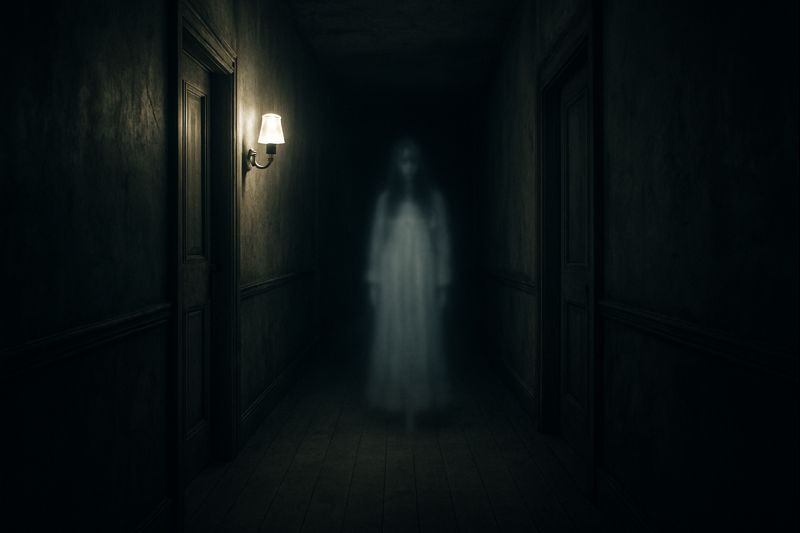
Across cultures and centuries, reports of ghostly encounters have remained remarkably consistent. Apparitions in hallways, shadow figures at the edge of vision, voices with no source—some people experience these phenomena repeatedly, while others insist they never have and never will. This disparity raises a compelling question: why do some people see ghosts while others do not?
The answer lies at the intersection of psychology, neurology, environment, belief systems, and—depending on perspective—genuine paranormal sensitivity. Rather than a single explanation, researchers and paranormal investigators point to several overlapping factors.
1. Differences in Human Perception
Human perception is not uniform. Two people can stand in the same room, observe the same environment, and experience it very differently.
Some individuals have heightened sensory awareness. They are more attuned to subtle changes in light, sound, and spatial cues. This heightened perception can make fleeting shadows or ambiguous stimuli appear meaningful—sometimes interpreted as apparitions.
Others have a stronger tendency toward pattern recognition, the brain’s instinct to assign structure and meaning to incomplete information. This trait, while evolutionarily useful, can also lead to seeing faces, figures, or movement where none objectively exist.
In paranormal terms, this is often described as being “sensitive” or “open.”
2. Psychological and Neurological Factors
Certain neurological conditions and mental states are known to increase the likelihood of seeing apparitions:
- Hypnagogic and hypnopompic hallucinations, which occur when falling asleep or waking, often involve vivid figures or presences.
- Temporal lobe sensitivity has been linked to intense spiritual or supernatural experiences.
- Stress, grief, trauma, and sleep deprivation can lower the brain’s filtering mechanisms, allowing internal imagery to feel external.
Importantly, experiencing these phenomena does not imply mental illness. Many otherwise healthy individuals report brief, isolated encounters under emotionally charged conditions—especially after the loss of a loved one.
3. Belief Systems and Expectation
Belief strongly shapes interpretation.
Someone who believes ghosts are real may interpret an unexplained sound or visual anomaly as a spirit. Someone who does not hold that belief may dismiss the same event as environmental noise or imagination.
This does not necessarily mean believers are “making it up.” Expectation influences attention. People who are open to paranormal explanations are more likely to notice—and remember—anomalous experiences rather than filter them out.
Conversely, skeptics may experience the same stimuli but unconsciously rationalize them before they ever reach conscious awareness.
4. Cultural and Social Conditioning
Cultural background plays a significant role in ghost sightings.
In cultures where spirits, ancestors, or apparitions are considered normal parts of reality, people report encounters more openly and more frequently. In societies that discourage supernatural beliefs, individuals may suppress or reinterpret similar experiences.
Children, in particular, report seeing apparitions more often than adults. As people age, social conditioning teaches them to distrust or ignore experiences that do not align with accepted reality.
Some paranormal researchers argue that people do not stop seeing ghosts—they stop acknowledging them.
5. Environmental Factors
Certain environments appear repeatedly in ghost reports:
- Old buildings with inconsistent lighting
- Locations with infrasound (low-frequency vibrations)
- Areas with electromagnetic field (EMF) fluctuations
- Isolated or liminal spaces such as forests, hospitals, or abandoned structures
Infrasound and EMF exposure can cause feelings of unease, visual distortions, and the sensation of a presence. People who spend more time in these environments—intentionally or by chance—are statistically more likely to report encounters.
This may explain why one person in a household experiences activity while others do not.
6. Emotional and Experiential Triggers
Ghost sightings often occur during periods of emotional intensity:
- Bereavement
- Major life transitions
- Illness
- Near-death experiences
In these moments, the mind may be more receptive to extraordinary interpretations—or, from a paranormal perspective, more perceptually “open” to non-physical phenomena.
Crisis apparitions—where a person sees a deceased loved one shortly after death—are a well-documented example, reported even by individuals with no prior belief in ghosts.
7. The Paranormal Interpretation: Sensitivity or Ability
From a paranormal viewpoint, some people may possess an innate sensitivity to phenomena beyond normal perception.
These individuals are often described as:
- Highly empathetic
- Intuitive
- Emotionally perceptive
- Prone to vivid dreams or altered states
Whether this sensitivity is psychological, neurological, or genuinely paranormal remains a subject of debate. However, many investigators note that certain individuals repeatedly experience activity across multiple locations, while others never do—suggesting something intrinsic rather than environmental alone.
8. Why Some People Never See Ghosts
Just as some people are more receptive, others may be neurologically or psychologically resistant to anomalous perception.
Their brains may:
- Filter ambiguous stimuli more aggressively
- Prioritize rational interpretation
- Dismiss unfamiliar sensations automatically
In practical terms, they may walk through a haunted location and experience nothing unusual—not because nothing occurred, but because their perceptual framework never allows it to register as significant.
Conclusion: A Matter of Mind, Environment, and Meaning
Whether ghosts are manifestations of consciousness, neurological artifacts, environmental illusions, or genuine spirits remains unresolved. What is clear is that human experience is deeply subjective.
Some people see ghosts because their minds, beliefs, emotional states, or environments allow for those experiences to emerge. Others never do—not because they are immune, but because their perception filters reality differently.
The question may not be “why do some people see ghosts?” but rather:
How much of reality are we each capable—or willing—to perceive?