
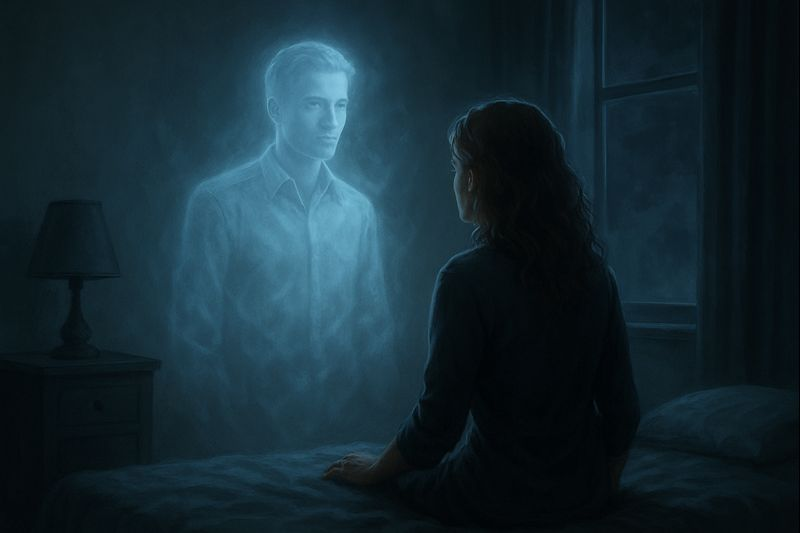
Throughout history, there have been reports of people seeing loved ones appear suddenly—often vividly and unmistakably—at the precise moment those individuals were experiencing extreme danger or death, sometimes from great distances away. These phenomena are known as crisis apparitions, and they occupy a unique space in paranormal research because they involve the living, not the dead.
Unlike traditional ghosts, crisis apparitions are not believed to be spirits lingering after death. Instead, they appear to manifest during moments of intense emotional or physical crisis, seemingly driven by desperation, attachment, or an unconscious need to communicate one final message.
What Is a Crisis Apparition?
A crisis apparition is the visual, auditory, or sensory perception of a living person who is undergoing a life-threatening event—most commonly death—at the exact time the apparition is witnessed. These manifestations typically occur without prior knowledge that anything is wrong.
Key characteristics commonly reported include:
- The apparition appears solid and lifelike, not transparent
- The witness often believes the person is physically present
- The encounter is brief, lasting seconds to minutes
- The apparition may attempt to speak or convey emotion
- News of the person’s death or injury later confirms the timing
In many cases, the witness only learns afterward that the person they saw was dying or had just died at the time of the encounter.
Historical Accounts and Early Research
Crisis apparitions were taken seriously by early psychical researchers in the late 19th and early 20th centuries. The Society for Psychical Research (SPR) in England documented hundreds of cases in its seminal work Phantasms of the Living (1886).
One frequently cited account involves family members seeing a soldier appear at home during wartime, only to later learn he was killed in battle at that exact hour. Such reports were common during periods of war, when sudden death and emotional bonds were heightened.
The SPR concluded that the statistical timing of many cases was too precise to be easily dismissed as coincidence.
Common Types of Crisis Apparitions
While each case is unique, crisis apparitions tend to fall into several recognizable categories:
1. Deathbed Manifestations
A person appears to a loved one at the exact moment of death, sometimes smiling, sometimes distressed. These apparitions often convey peace or farewell.
2. Accident or Trauma Apparitions
Witnesses report seeing someone who later turns out to have been involved in a fatal accident at the time—car crashes, drownings, or industrial incidents.
3. Silent Observers
The apparition appears, makes eye contact, but does not speak. The witness often feels an overwhelming emotional surge or sense of dread.
4. Auditory or Sensory Apparitions
Instead of seeing the person, witnesses may hear their voice, feel a touch, or sense a strong presence coinciding with the crisis.
Notable Documented Cases
The Louisa Smith Case (1860s)
A woman reported seeing her brother enter her bedroom late at night, pale and silent. He vanished suddenly. The next morning, she received word that he had died at sea during the night, with the time of death matching her experience.
The Railway Engineer Apparition
Multiple witnesses reported seeing a railway engineer standing beside the tracks hours after he had died in a distant accident. Investigations later confirmed he had been killed at the time of the sightings, far from the location where he appeared.
Paranormal Interpretations
From a paranormal perspective, crisis apparitions are often explained as:
- Astral projection triggered by trauma
- A subconscious soul-flight during the dying process
- A final act of will or emotional attachment
- A non-physical consciousness briefly detaching from the body
Some researchers argue that extreme stress may cause a temporary separation between consciousness and the physical form, allowing the apparition to appear elsewhere.
Psychological and Scientific Explanations
Skeptics propose alternative explanations, including:
- Hallucinations induced by stress or fatigue
- Coincidence combined with memory reconstruction
- Subconscious anticipation of loss
- Sleep-related hypnagogic imagery
However, these explanations struggle to fully account for cases involving multiple witnesses, precise timing, or situations where no prior concern existed.
How Crisis Apparitions Differ from Ghosts
| Crisis Apparitions | Traditional Ghosts |
|---|---|
| Involve living individuals | Involve deceased individuals |
| Occur at moment of crisis | Occur after death |
| Usually one-time events | Often recurring |
| Purpose-driven | Often location-bound |
This distinction makes crisis apparitions especially compelling, as they blur the boundary between life, death, and consciousness.
Why Crisis Apparitions Matter
Crisis apparitions challenge conventional ideas about the limits of the human mind and the nature of consciousness. They raise profound questions:
- Can consciousness exist independently of the body, even briefly?
- Is there an unseen communication system driven by emotional bonds?
- Do humans possess an untapped ability to project awareness under extreme conditions?
For believers, crisis apparitions provide comfort—suggesting that connection transcends distance and even death. For researchers, they remain one of the strongest arguments that something unexplained is occurring.
Final Thoughts
Crisis apparitions remain one of the most emotionally powerful and perplexing phenomena in paranormal research. Whether interpreted as psychic manifestations, final goodbyes, or unexplained psychological events, they continue to be reported across cultures, eras, and belief systems.
When someone appears without warning—only to be confirmed dying at that very moment—it leaves behind an unsettling but enduring question:
Was it imagination, or was it a final reaching across the boundary of life itself?