By The Unexplained Files
Introduction: A Faceless Fear
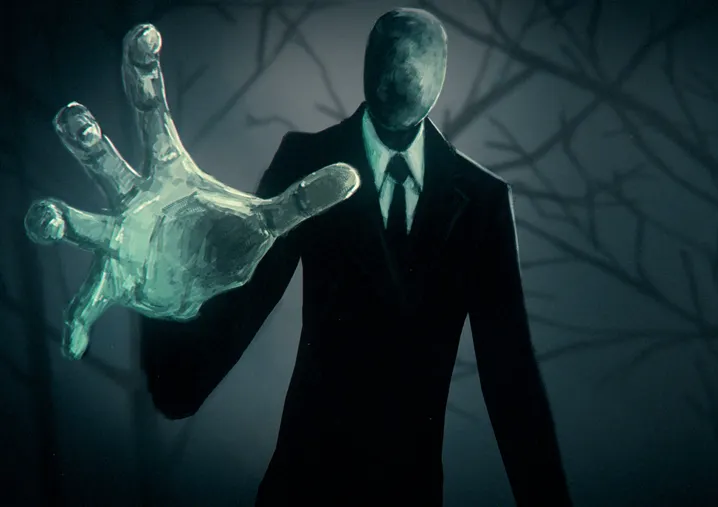
Tall, impossibly thin, dressed in a black suit, with no face—only a smooth, pale void where eyes and mouth should be. Slender Man is one of the most recognizable modern horror figures in existence, yet unlike traditional legends, he was born not in ancient folklore, but on the internet. Despite his digital origins, Slender Man has become something far more unsettling: a myth that escaped the screen and entered real life.
The Birth of Slender Man
Slender Man first appeared in June 2009 on the Something Awful forums during a Photoshop contest asking users to create paranormal images. User Eric Knudsen, known online as Victor Surge, submitted two black-and-white photographs depicting children stalked by a tall, faceless figure lurking in the background.
What made Slender Man different was not just the image—but the fake lore attached to it. Knudsen included fabricated quotes, dates, and witness accounts, giving the illusion of historical documentation. Other users joined in, expanding the myth collaboratively. Within weeks, Slender Man had evolved into a shared narrative—an open-source horror legend.
The Slender Man Mythos
As the legend grew, several core traits became consistent:
- Extraordinary height (often 8–10 feet tall)
- Featureless white face
- Black suit and tie
- Elongated arms, sometimes transforming into tentacles
- Ability to teleport or distort reality
- Targeting children, especially those who are isolated or vulnerable
Slender Man is often associated with:
- Forests and abandoned places
- Memory loss and paranoia
- Electronic interference (static, distorted images)
- Psychological manipulation rather than physical violence
Unlike traditional monsters, Slender Man rarely attacks directly. He watches, waits, and influences.
Creepypasta and Digital Folklore
Slender Man became a cornerstone of creepypasta, short-form horror stories shared online. Videos, web series, and games expanded his presence, most notably the YouTube series Marble Hornets, which reframed Slender Man as “The Operator.”
This shift introduced a new kind of fear—analog horror, where distorted footage, glitches, and found videos blurred fiction and reality. Slender Man wasn’t just something you read about; he appeared to exist inside the technology itself.
When Fiction Turned Dangerous
In 2014, Slender Man crossed a terrifying boundary.
Two 12-year-old girls in Waukesha, Wisconsin, lured a classmate into the woods and stabbed her 19 times, later telling police they believed Slender Man was real and demanded the attack as a test of loyalty.
The victim survived. The incident shocked the world.
While Slender Man was fictional, the belief in him was not. Psychologists later emphasized the role of mental illness and suggestibility, but the case revealed how deeply digital myths can embed themselves—especially in young minds.
Psychological Power of Slender Man
Why did Slender Man resonate so strongly?
- Facelessness removes empathy and identity
- Tall, thin silhouette triggers instinctual fear
- Lack of clear rules makes him unpredictable
- Implied presence is more frightening than explicit action
Slender Man represents fear of being watched, loss of control, and unknown authority—modern anxieties amplified by the digital age.
Is Slender Man Based on Older Legends?
While fictional, Slender Man echoes ancient archetypes:
- The Tall Man – shadow figures reported worldwide
- The Pied Piper – luring children away
- The Black Annis / Der Großmann – faceless forest spirits
- Shadow People – modern paranormal encounters
This resemblance fuels speculation that Slender Man may be a modern mask for an older fear, or that he taps into something deeply embedded in the human psyche.
Slender Man Today
Though his popularity has faded from its peak, Slender Man remains influential. He has appeared in:
- Horror films and documentaries
- Video games
- Academic studies on digital mythology
- Internet culture discussions about belief and reality
He stands as a warning—not just about monsters, but about how stories evolve, spread, and influence behavior.
Conclusion: The Monster We Created
Slender Man is not real in the traditional sense—but his impact is undeniable. He proves that myths no longer need centuries to form. In the digital age, belief spreads faster than truth, and fear can be crowdsourced.
Slender Man is the monster of the internet era: faceless, watching, and born from collective imagination.
And once created, myths rarely stay contained.
Picture by ukupskrb on Wallpapers.com