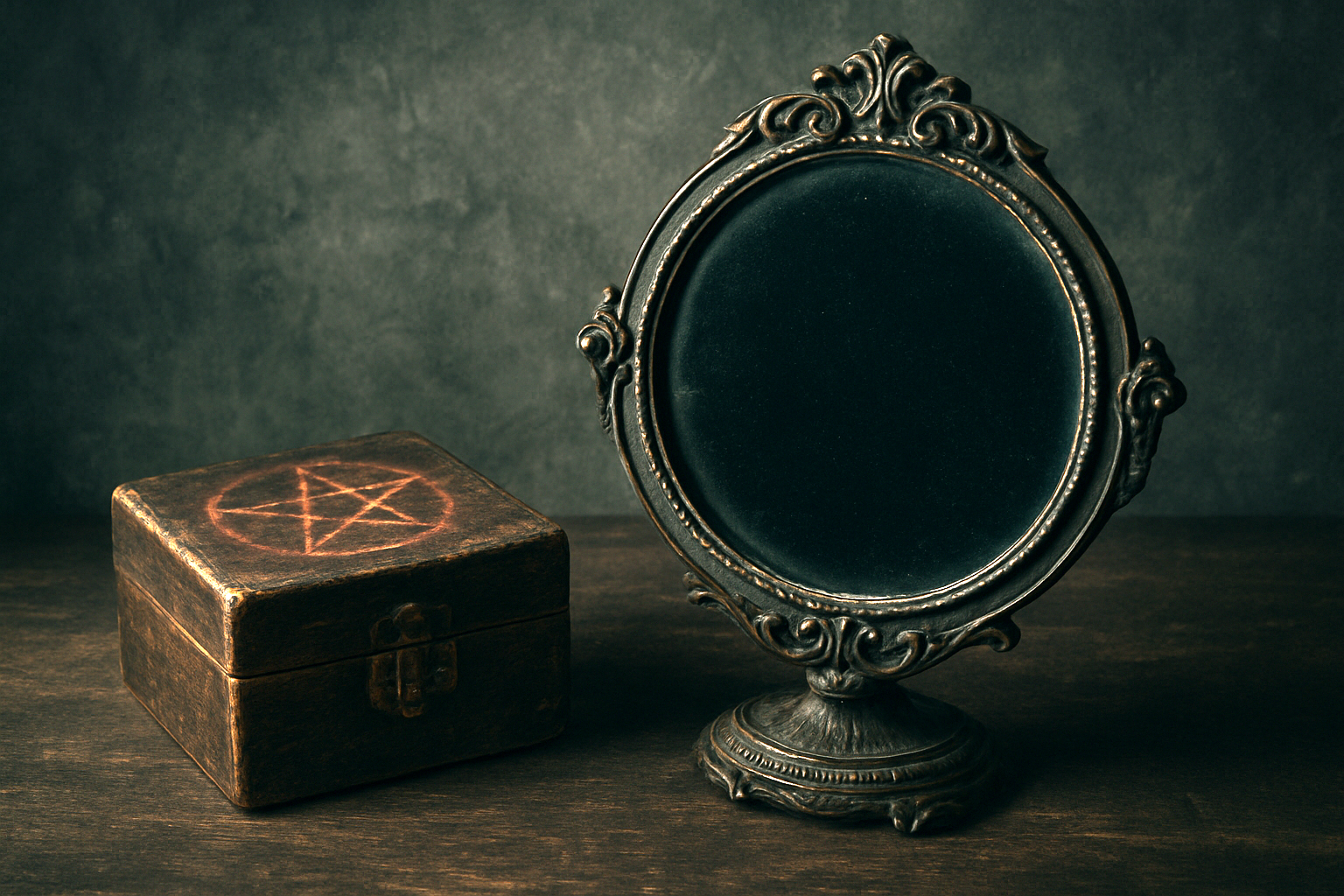
Across cultures and centuries, certain objects have earned reputations that transcend their material form. Some are feared for the misfortune they allegedly bring. Others are revered—or avoided—for their power to reveal what should remain hidden. Among these are two of the most enigmatic categories in the paranormal world: cursed objects and scrying mirrors.
This companion article explores how these items gain their dark reputations, the theories behind their power, and the most infamous examples documented by collectors, occult practitioners, and investigators.
I. The Nature of Cursed Objects
A cursed object is typically defined as an item believed to carry a negative spiritual imprint, either from:
- A traumatic event
- A deliberate ritual
- An associated entity
- Prolonged emotional exposure
- A legacy of misfortune tied to past owners
These objects are frequently found in estate sales, antique shops, abandoned homes, or museums specializing in paranormal artifacts.
Common Characteristics of Cursed Objects
Investigators often report the following patterns:
- A consistent chain of misfortune among owners
- Sudden accidents or illnesses following acquisition
- Persistent nightmares or oppressive emotions
- Electrical disturbances near the item
- It moving locations subtly or returning to a specific spot
- Pets reacting aggressively or avoiding it entirely
While scientific explanations exist—confirmation bias, psychological priming, or environmental effects—the frequency of these reports keeps cursed objects firmly embedded in paranormal lore.
II. Famous Cursed Objects Throughout History
1. The Dybbuk Box
A wine cabinet allegedly containing a malevolent spirit from Jewish folklore. Over multiple owners, the box caused:
- Hallucinations
- Night terrors
- Relationship breakdowns
- Financial ruin
Though skeptics argue it is a created legend, its notoriety persists due to consistent testimony across owners.
2. The Basano Vase (Italy)
A silver vase said to bring sudden death to anyone who owns it. According to legend, every person who held the vase died violently or unexpectedly, leading authorities to bury it in an undisclosed location.
3. Robert the Doll (Key West, USA)
Perhaps the most famous cursed doll. Visitors who mock or disrespect Robert often report:
- Car accidents
- Job loss
- Illness
- Electronics failing
Museum staff receive thousands of apology letters annually.
4. The Anguished Man Painting
A disturbing painting allegedly mixed with human blood. Owners report:
- A shadow man appearing at night
- Whispering voices
- Suffocating nightmares
The painting remains in private storage due to ongoing activity.
III. How Objects Become Cursed
1. Intentional Ritual Cursing
Some curses originate from deliberate acts—rituals meant to:
- Bind a spirit
- Enforce revenge
- Seal trauma or energy
- Protect an item (backfiring later)
Occult practitioners warn that objects used as ritual vessels are especially dangerous when mishandled.
2. Residual Trauma
Objects near intense events—murders, suicides, prolonged suffering—may absorb emotional or psychic imprints.
This theory parallels the concept of residual hauntings often tied to buildings.
3. Spirit Attachment
Entities may attach to items they favored in life or to objects that resonate with their emotional state.
4. Generational Misfortune
Some items are passed down through families with longstanding patterns of tragedy. Whether supernatural or coincidental, the curse becomes part of the object’s identity.
IV. Transitioning to Scrying Mirrors: Tools of Divination and Danger
Where cursed objects are feared for what they contain, scrying mirrors are feared—and respected—for what they reveal.
Scrying mirrors are reflective surfaces, traditionally:
- Obsidian
- Polished brass
- Dark glass
- Stone with natural sheen
Used in rituals to obtain visions, communicate with spirits, or tap into subconscious knowledge, they have a long history in occult and mystical traditions.
How Scrying Mirrors Work (According to Practitioners)
Scrying mirrors are believed to:
- Narrow the viewer’s perception
- Create a trance-like state
- Serve as focal points for spirit communication
- Act as symbolic gateways to other realms
- Enhance psychic impressions
Even skeptics acknowledge that prolonged focus into a dark surface can trigger hypnagogic imagery, making experiences feel vivid and uncanny.
V. Famous Scrying Mirrors in Occult History
1. John Dee’s Obsidian Mirror
Used in 16th-century England by the royal occultist John Dee and his medium Edward Kelley, this volcanic stone mirror was allegedly used to:
- Contact ethereal beings
- Receive prophetic visions
- Perform “angelic conversations”
Museum curators report that the mirror still makes staff uneasy due to its dark, absorbing appearance.
2. Aztec Tezcaltlipoca Mirrors
Obsidian mirrors were sacred to the Aztec god Tezcatlipoca, whose name means “Smoking Mirror.” These mirrors were used in:
- Ritual prophecy
- Ceremonial communication with gods
- Royal spiritual guidance
Their association with death and destiny endures today.
3. Victorian Black Mirrors
During the spiritualism boom of the 19th century, black glass mirrors became common tools for:
- Seances
- Spirit communication
- Mediumship
Many became infamous after séances went wrong, resulting in hauntings or persistent shadow figures.
VI. Risks Associated With Scrying Mirrors
Even experienced practitioners caution against careless use. Reported risks include:
- Reflected shadow entities
- Sleep paralysis following sessions
- Feelings of being watched
- Persistent “afterimages” or visions
- Emotional instability after extended use
- Apparent voices or knocks during divination
Some users claim that mirrors used for scrying can become unintentionally haunted, retaining energies or connections formed during rituals.
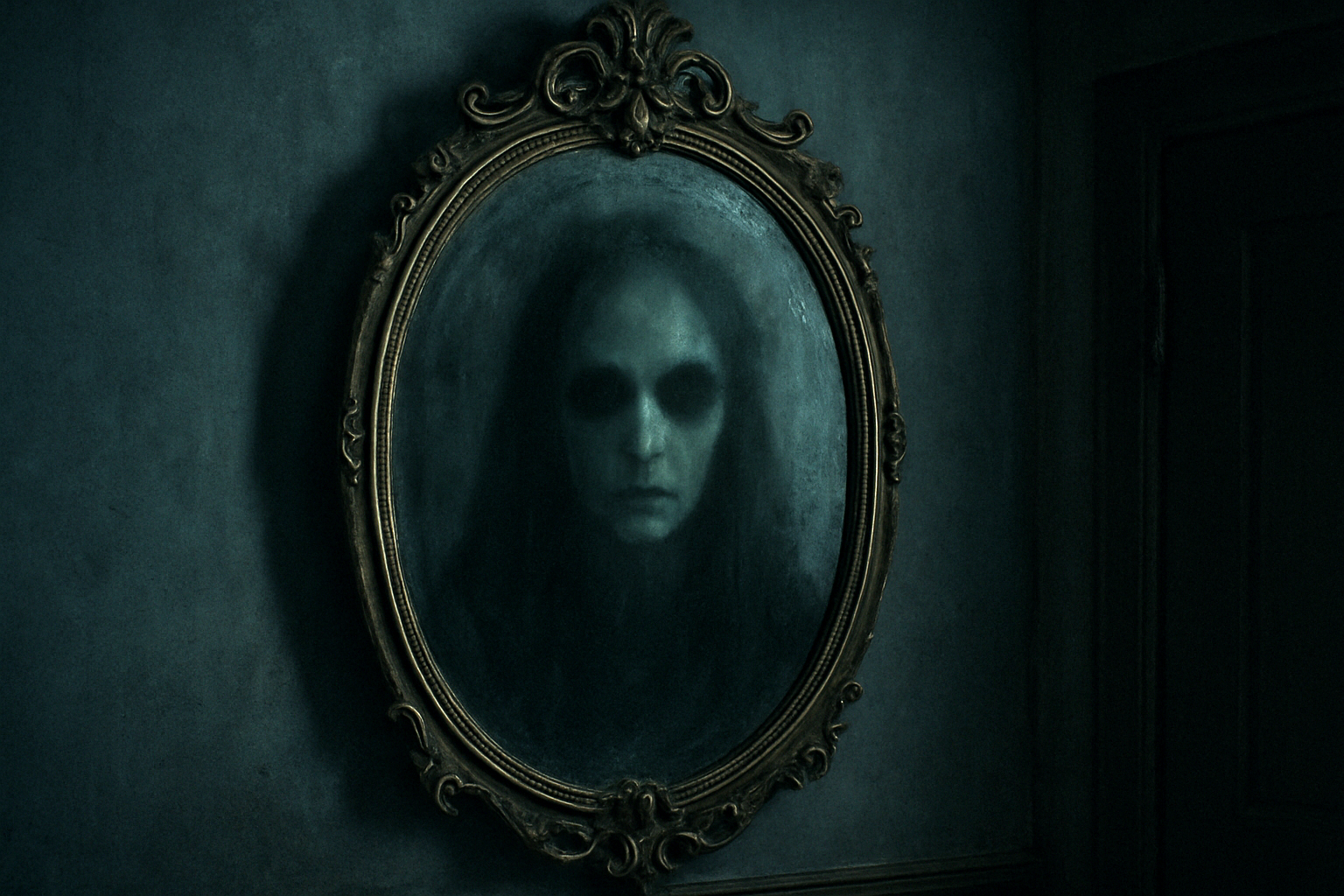
VII. Distinguishing Scrying Mirrors From Haunted Mirrors
While they overlap, the two differ in purpose and behavior:
| Haunted Mirror | Scrying Mirror |
|---|---|
| Activity occurs spontaneously | Activity occurs during use |
| Often tied to a specific spirit | Often tied to the practitioner’s intent |
| Usually accidental | Purposefully crafted for divination |
| May display anomalous reflections | Usually produces visions or symbolic imagery |
| Considered dangerous in the home | Considered a ritual tool |
A scrying mirror can become haunted, but its initial purpose is deliberate spiritual engagement.
VIII. Why These Objects Continue to Captivate Us
Cursed objects and scrying mirrors represent two sides of the same mystical coin:
- One brings the unseen into our world.
- The other brings us into contact with the unseen.
Their stories highlight humanity’s enduring belief that physical objects can hold memories, power, or gateways to forces beyond our understanding. Whether one views them as psychological artifacts or supernatural catalysts, their place in paranormal lore remains as strong as ever.