


Discover the chilling folklore of Krampus—the horned, devilish Christmas creature from Alpine mythology. Learn about Krampusnacht, his origins, symbolism, and why this eerie holiday legend is more popular than ever.
Introduction: Who Is Krampus?
Every December, festive lights, warm drinks, and cheerful songs fill the air—but in Central Europe, the Christmas season carries a much darker tradition. Enter Krampus, a horned, fearsome creature who punishes misbehaving children and balances the generosity of Saint Nicholas.
As this ancient figure grows in worldwide popularity, many wonder: Where did Krampus come from, and what does his legend mean?
The Origins of Krampus: A Pre-Christian Phantom
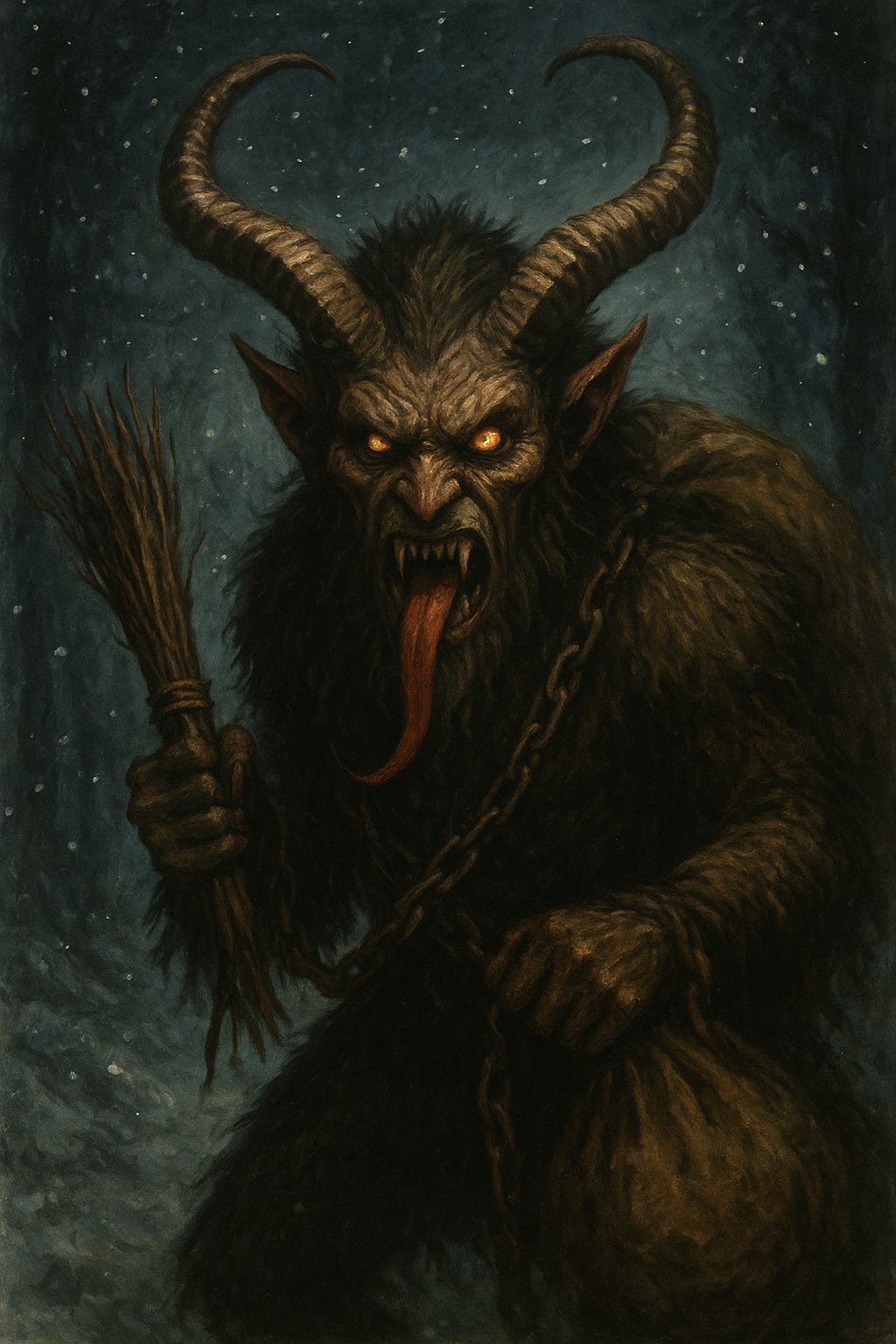
Krampus is believed to date back to pre-Christian Alpine pagan traditions, long before Saint Nicholas entered the picture. His goat-like appearance—complete with fur, horns, fangs, and a long lolling tongue—resembles creatures tied to winter solstice rituals.
Pagan Roots
Scholars link Krampus to:
- Satyrs from Greek mythology
- Pan, the goat-footed god
- Winter spirits believed to ward off evil
When Christianity spread, churches attempted to suppress pagan festivals. But rather than disappearing, Krampus eventually merged with Christian customs, becoming the dark counterpart to Saint Nicholas.
The Role of Krampus in Christmas Folklore
While Saint Nicholas rewards good children with sweets and gifts, Krampus is responsible for the other end of the spectrum.
Krampus’ Tools of Terror
Traditionally, Krampus carries:
- Birch rods (ruten) for whipping naughty children
- Heavy chains, symbolizing the binding of evil
- A sack or basket used to take away the worst-behaved kids
Though modern celebrations treat him more as spooky fun, old tales paint Krampus as a very real threat—especially for those on the naughty list.
Krampusnacht: The Night of the Christmas Demon
Krampusnacht (Krampus Night), celebrated on December 5th, is the main event in Alpine countries like Austria, Germany, Slovenia, and Hungary.
What Happens on Krampusnacht?
On this night:
- Krampus roams the streets, rattling chains and growling
- People dressed as Krampus take part in Krampuslauf (Krampus Runs)
- Fires blaze, bells ring, and crowds cheer or flee in fun fright
These parades feature elaborate handcrafted masks, fur suits, and dramatic performances—blending ancient tradition with modern festival culture.
Symbolism: What Krampus Really Represents
Krampus is more than a holiday monster. His legend reflects deeper themes rooted in Alpine culture.
1. Moral Instruction
Parents historically used Krampus stories to encourage good behavior.
The fear of being visited by a horned creature at night was a powerful motivator.
2. Duality of the Winter Season
Krampus symbolizes:
- Darkness vs. light
- Reward vs. punishment
- Winter’s harshness vs. holiday warmth
He serves as a reminder that life involves both comfort and challenge.
3. Survival of Ancient Traditions
Krampus celebrations help preserve centuries-old rituals, mask-making techniques, and communal customs.
Krampus in Modern Culture
Krampus has exploded in global popularity thanks to:
- Horror films and holiday movies
- Viral artwork and memes
- North American Krampus parades
- Renewed interest in folklore and mythology
Today, Krampus appeals to those who crave a darker, edgier twist on Christmas tradition.
Krampus in Art, Literature, and Media
Vintage Krampuskarten (Krampus postcards) from the 1800s depict the creature as both terrifying and mischievous.
In modern media, Krampus appears in:
- Graphic novels
- Holiday horror films
- Video games
- Fantasy fiction
Artists love Krampus because his imagery blends gothic horror with festive winter themes.
Why the Story of Krampus Endures
Krampus captivates people because he represents something timeless—our fascination with the unknown. In a season filled with sweetness and light, Krampus offers contrast: a whisper of shadow, a thrill of danger, a reminder of the wildness of winter.
He keeps history alive and adds a touch of mystery to the holidays.
Conclusion: The Dark Visitor of December
Whether you view him as a mythic monster, a cultural relic, or simply a fun fright, Krampus enriches the holiday season with depth and folklore. As winter nights grow longer, imagine the crunch of snow, the echo of bells, and the faint clatter of chains…
Somewhere in Alpine legend, Krampus is still watching.
The Dark Tale of Krampus: Europe’s Shadowy Christmas Legend
When most people think of the winter holidays, they imagine warm fires, sparkling lights, and the comforting presence of jolly figures like Santa Claus or Saint Nicholas. But in parts of Central Europe—particularly Austria, Bavaria, Slovenia, and Hungary—the festive season has a much darker companion lurking in its folklore. His name is Krampus, and his story is a chilling reminder that not every December visitor brings gifts and good cheer.
Who Is Krampus?
Krampus is a horned, fanged, devilish creature known for punishing naughty children during the Christmas season. His appearance is unmistakable:
- Long, curling horns
- A face twisted with malice
- A long tongue that lolls from his jaw
- Furry, goat-like body
- Chains clattering around his limbs
- A bundle of birch sticks or a whip
- Sometimes a sack for carrying away misbehaving kids
Unlike Santa—or Saint Nicholas, who inspired many of Santa’s traits—Krampus isn’t here to judge. He assumes the worst. While Saint Nicholas rewards good children with treats, Krampus deals with the “naughty list” in the most dramatic ways: frightening them, whipping them, or in older legends, dragging them away entirely.
Origins Shrouded in Shadow
The origins of Krampus stretch back far before Christian traditions took root in Europe. Many folklorists believe Krampus comes from pre-Christian Alpine traditions, perhaps linked to pagan fertility rituals or winter solstice celebrations. His goat-like appearance aligns with ancient depictions of half-goat, half-human creatures like satyrs or the pagan god Pan.
When Christianity spread through Europe, many pagan traditions were suppressed—but some were woven into Christian customs. Krampus became the unsettling counterpart to Saint Nicholas, forming the well-known “Naughty and Nice” dichotomy long before modern holiday culture emphasized it.
Krampusnacht: The Night of Frights
Krampus’ biggest celebration happens on Krampusnacht, or Krampus Night, on December 5th—just before the Feast of Saint Nicholas on December 6th. On Krampusnacht, young men traditionally dress as the creature, donning elaborate handcrafted masks and shaggy suits. They roam through the streets, rattling chains and growling to terrify anyone who crosses their path.
These events, called Krampuslauf or “Krampus Runs,” have become increasingly popular, especially in Austria and Germany. Thousands gather each year to watch as Krampus figures parade, stomp, and snarl through the snow-covered streets. Fireworks crackle, drums thunder, and the line between ancient folklore and modern celebration blurs into a thrilling spectacle.
Symbolism Behind the Demon of December
To modern eyes, Krampus may look like nothing more than a holiday monster, but his presence in folklore serves several deeper purposes:
1. Moral Teaching
Traditional stories used Krampus as a way to scare children into behaving. If sweets and praise weren’t enough, the threat of a horned demon showing up seemed to do the trick.
2. Reflection of Duality
Krampus represents the darker side of human nature and the world itself. Winter can be harsh, bleak, and unforgiving—qualities he embodies. His pairing with Saint Nicholas highlights the balance of reward and punishment, good and evil, light and darkness.
3. Preservation of Culture
Krampus is a living relic of pre-Christian Alpine traditions. Celebrating him is a way for communities to maintain a link to their heritage through storytelling, craftsmanship, and communal events.
Modern Revival and Global Popularity
In recent years, Krampus has escaped his Alpine home and gained global recognition. Movies, TV specials, parades, and Halloween-like celebrations have popped up in North America and beyond. The creature’s sinister charm appeals to those who crave something darker during a season usually filled with sugar-coated cheer.
Part of his renewed popularity stems from a cultural shift: many people enjoy exploring the gritty, strange, or eerie aspects of folklore. Krampus fits this perfectly. He is both terrifying and oddly charismatic—a figure who brings mystery to a season often dominated by commercial joy.
Krampus in Art and Literature
Vintage postcards from the 1800s show Krampus as mischievous and threatening, sometimes depicted chasing children or carrying them off. Modern artists have leaned into his demonic traits, portraying him with fiery eyes and monstrous proportions. Writers often explore Krampus as a symbol of judgment, an agent of chaos, or even a misunderstood antihero.
Why Krampus Endures
The story of Krampus endures because it taps into a universal truth: we are fascinated by what frightens us. In the comfort of modern life—with warm homes, safe streets, and predictable routines—the idea of a folkloric creature roaming winter nights is thrilling, almost nostalgic. Krampus is the embodiment of an older world, where darkness and cold held real danger, and where myths explained what people couldn’t understand.
Final Thoughts: The Midnight Visitor
Whether you see Krampus as a warning, a relic of pagan tradition, or simply a thrilling piece of holiday folklore, his story adds depth and intrigue to the winter season. As snow falls and celebrations begin, imagine a pair of horns silhouetted against the moonlight, chains clinking softly in the cold air.
Somewhere out there in the Alpine night, Krampus prowls—reminding us that even in the season of joy, a little darkness always lingers.