Bigfoot: An Informative Overview
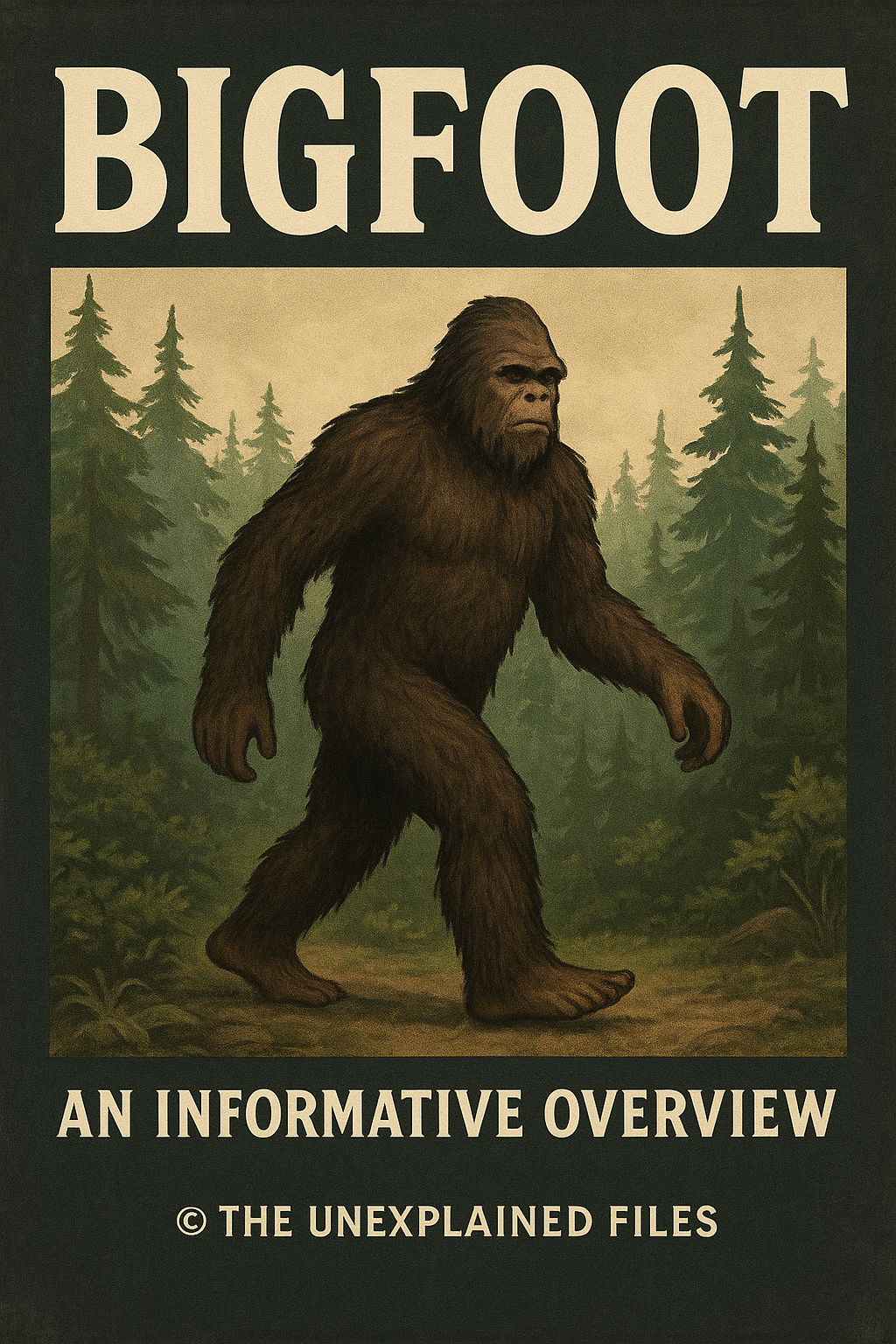
Bigfoot—also known as Sasquatch—is one of North America’s most enduring cryptids. For centuries, reports of a large, hair-covered, humanlike creature lurking in remote forests have sparked fascination, debate, and scientific curiosity. Though no conclusive proof has ever been found, Bigfoot remains deeply embedded in folklore, pop culture, and the imagination of many who explore the wilderness.
Origins of the Legend
Indigenous Traditions
Long before the term “Bigfoot” appeared, Indigenous peoples across North America shared stories of large, forest-dwelling beings. Tribes such as the Salish, Chinook, and Coast Miwok described creatures with names like Sasq’ets, Stiyaha, and Hairy Man. These beings were often seen as powerful guardians of the forest, sometimes benevolent, sometimes feared, but always respected.
Early Settler Sightings
European settlers arriving in the 1800s began reporting encounters with mysterious, ape-like creatures. Newspaper accounts from the 19th century describe “wild men” seen in the woods—often matching the modern description of Bigfoot.
The name “Bigfoot” gained wider attention in 1958, when loggers in Northern California found massive footprints near Bluff Creek. This incident ignited modern Bigfoot enthusiasm and introduced the phenomenon to the broader American public.
Descriptions and Characteristics
While reports vary, most descriptions share common traits:
- Height: 6–10 feet tall
- Build: Massive, muscular, broad-shouldered
- Hair: Brown, black, reddish, or occasionally white
- Footprints: 15–24 inches long, with five toes
- Odor: Some witnesses describe a strong, unpleasant smell
- Behavior: Shy, elusive, nocturnal, and usually non-aggressive
People who claim sightings often describe smooth, gliding movements—more fluid than a bear or human.
Reported Evidence
1. Footprints
Footprints remain the most common type of alleged evidence. Some show dermal ridges (similar to fingerprints), suggesting authenticity, while others have been proven hoaxes.
2. Visual Sightings
Thousands of reports come from hikers, hunters, and outdoor workers. Most sightings last only seconds, often at long distances or in low light.
3. The Patterson–Gimlin Film (1967)
Filmed in Bluff Creek, California, this short clip of a large, walking, apelike figure is the most famous “proof” to date.
Supporters argue the creature’s muscle movement and gait are too realistic for a costume; skeptics maintain it was likely staged.
4. Audio Recordings
Some recordings, like the “Sierra Sounds,” feature high-pitched whoops and guttural roars not attributed to known animals. Authenticity remains disputed.
5. Hair and DNA
Various hair and DNA samples have been analyzed over the years. Most turn out to be from bears, deer, or other known animals; none confirm the existence of an unknown primate.
Scientific Perspectives
Most mainstream scientists remain unconvinced due to:
- Lack of verified biological remains (bones, bodies, scat)
- High probability of misidentification (bears, elk, humans)
- The role of hoaxes and folklore
However, some researchers believe the idea shouldn’t be dismissed outright. They point to large, remote wilderness regions—such as the Pacific Northwest—where a small, elusive population could theoretically exist.
Anthropologists sometimes speculate that Bigfoot sightings might connect to memories of extinct hominids like Gigantopithecus, a massive ape that lived in Asia.
Popular Theories
Natural Animal Misidentification
Many sightings may simply be bears standing upright, large elk, or humans at a distance.
Surviving Ancient Hominid
Some believe Bigfoot could be a remnant population of an unknown hominid species. This is scientifically intriguing but lacks physical evidence.
Cultural Symbol
Bigfoot may represent humanity’s enduring fascination with wilderness mysteries—symbolizing both fear and respect for the unknown.
Hoaxes and Misperceptions
While many claims appear genuine, hoaxes have undeniably fueled the legend. Fake prints, costumes, and fabricated stories muddy the waters for serious research.
Bigfoot in Modern Culture
Bigfoot has evolved into more than a cryptid; it is a cultural icon.
- Television: Shows like Finding Bigfoot, Expedition Bigfoot, and various documentaries keep the topic in the spotlight.
- Merchandise: Stickers, shirts, statues, and souvenirs appear in nearly every mountain town.
- Tourism: Towns such as Willow Creek, California, and Skamania County, Washington, celebrate festivals dedicated to Sasquatch.
- Research Groups: Organizations like the BFRO (Bigfoot Field Researchers Organization) collect sightings and conduct investigations.
Why Bigfoot Endures
The Bigfoot legend persists because it sits at the crossroads of folklore, science, and imagination. As long as vast, wild landscapes exist—and as long as people keep encountering unexplained phenomena—the possibility of Bigfoot will continue to inspire believers, skeptics, and researchers alike.
Whether an undiscovered species, a cultural myth, or a mix of both, Bigfoot remains one of North America’s most captivating mysteries.